Automated guided vehicles change factory logistics. They make moving goods fast and safe. However, many engineers face a common problem. Choosing the wrong wheel drive system hurts factory performance. It causes unexpected downtime and increases your maintenance costs.
To build a reliable mobile robot, you must understand your options. Houzai, the official partner of Zhuolan, provides high-quality drive solutions. This guide breaks down the core differences between the two main wheel types. You will learn how to choose the best option for your budget and environment.
How AGV Steering Wheels Work
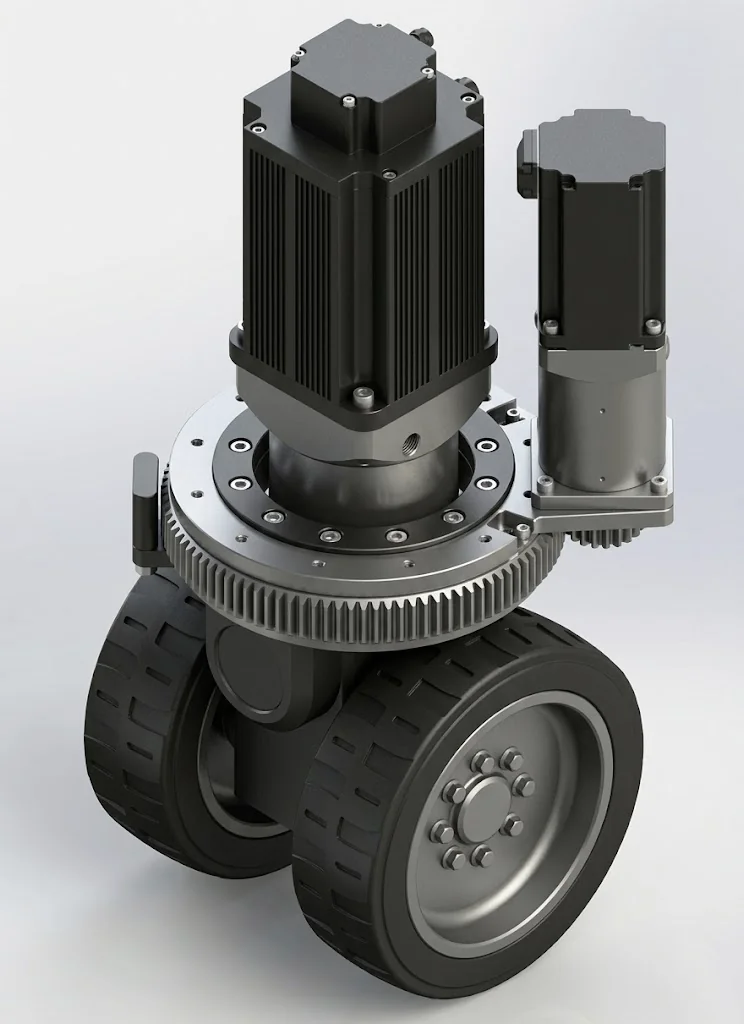
The Anatomy of a Steering Wheel
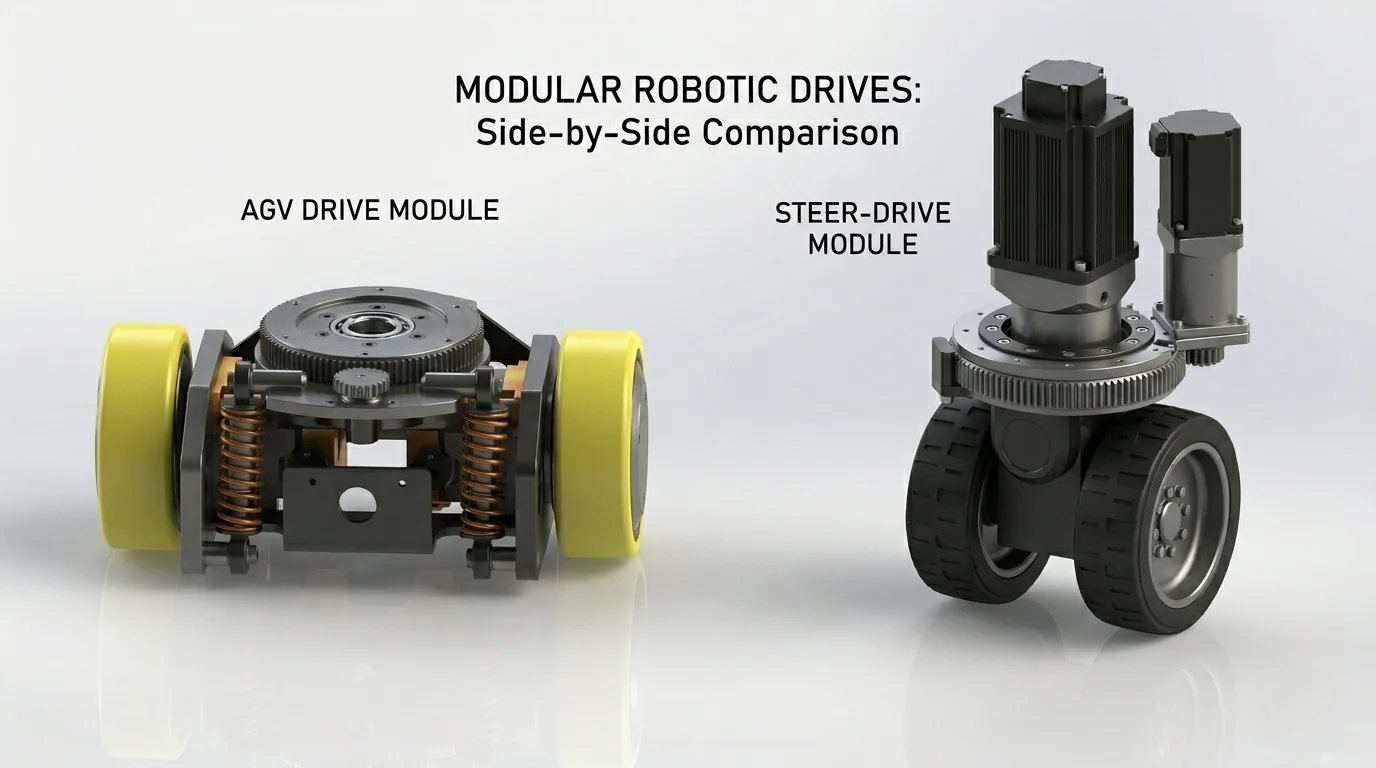
A steering wheel is a complete drive module. It contains a wheel hub, a durable tire, and precision bearings. Heavy-duty bearings connect this module directly to the robot chassis. An electric motor drives the wheel while a separate motor controls the direction. According to ISO 3691-4 industrial safety standards, precise mechanical integration is vital for automated vehicles.
Key Benefits for Tight Spaces
Steering wheels can rotate a full 360 degrees. This unique feature allows the robot to move in any direction instantly. The smart electric system ensures exact path tracking. These wheels carry heavy loads easily. They also resist dust and oil in rough factory environments.
The Mechanics of Differential Wheels
How Speed Distribution Works
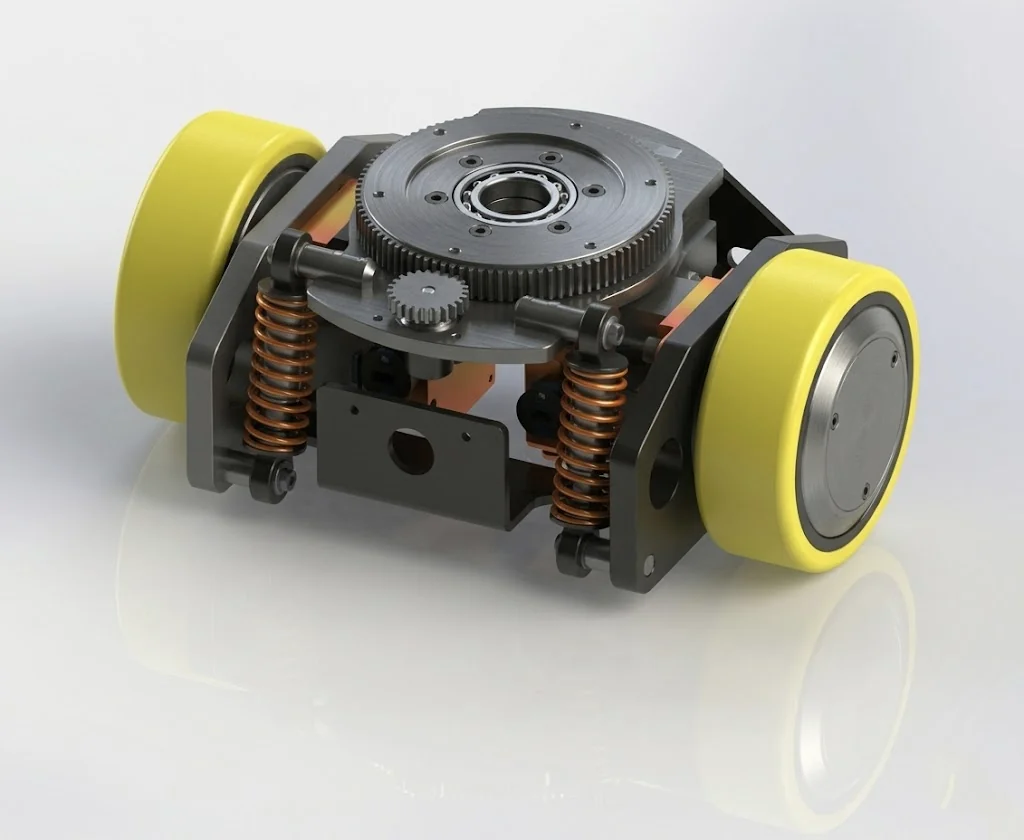
A differential wheel system uses a simpler design. It consists of two independent drive wheels and several passive casters. The system does not use a separate steering motor. Instead, it changes direction by varying the speed of the left and right wheels.
Stability on Rough Floors
When one wheel spins faster than the other, the vehicle turns smoothly. This method delivers excellent torque and quick acceleration. Differential systems work very well on uneven floors. They adjust to small slopes without losing traction. This makes them highly reliable for standard factory layouts.
5 Steps for Proper AGV Wheel Selection
Choosing the right drive system requires a clear method. Follow these five steps to find the right fit for your project.
- Calculate the Total Load: Measure the maximum weight of the vehicle and its cargo. Steering wheels excel at high load capacities.
- Check the Floor Space: Measure your aisle widths. If your factory has very tight spaces, choose a 360-degree steering module.
- Inspect the Ground Surface: Look for slopes or uneven joints. Differential systems handle rough floors with better stability.
- Define Accuracy Needs: Determine how precisely the robot must stop. Steering modules offer higher steering accuracy for precision docking.
- Evaluate Total Cost: Balance your initial budget with long-term maintenance. Houzai offers cost-effective options that combine Zhuolan premium quality with affordable pricing.
Real-World Case Study in High-Density Storage
A major logistics center needed to upgrade its automated warehouse. The facility had narrow aisles and high shelves. The engineering team initially faced poor steering control with standard drives.
The company partnered with Houzai for a complete technical solution. They installed heavy-duty steering wheels on their new fleet. This upgrade allowed the vehicles to turn on the spot. The robots navigated tight paths without slowing down. As a result, the facility increased its daily transport efficiency by twenty percent. The durable tire materials also reduced part replacement costs.

Limitations of Each Driving System
No single wheel design fits every industrial application. Steering systems offer amazing flexibility but require complex control software. They also have a higher initial cost.
On the other hand, differential systems are more affordable and easier to program. However, they cannot move sideways. They also cause more tire wear during sharp pivot turns on abrasive floors.
Frequently Asked Questions about AGV Wheels
Q: Which wheel type is better for narrow factory aisles?
A: Steering wheels are ideal for narrow aisles. Their ability to turn 360 degrees allows robots to maneuver without turning around.
Q: Can differential wheels handle sloped surfaces?
A: Yes. Differential drives adjust the power to each wheel independently. This feature provides excellent traction on small ramps and uneven floors.
Q: How does Houzai support automated vehicle projects?
A: Houzai is the core agent for Zhuolan. We offer a one-stop solution. This includes high-performance gearboxes, driving wheels, and full technical support.