Why Gear Type Matters in Planetary Reducers
When selecting a planetary reducer, engineers often focus on reduction ratio, output torque, backlash, and mounting dimensions. Gear tooth design is another factor worth considering, as it affects how the gearbox transmits power.
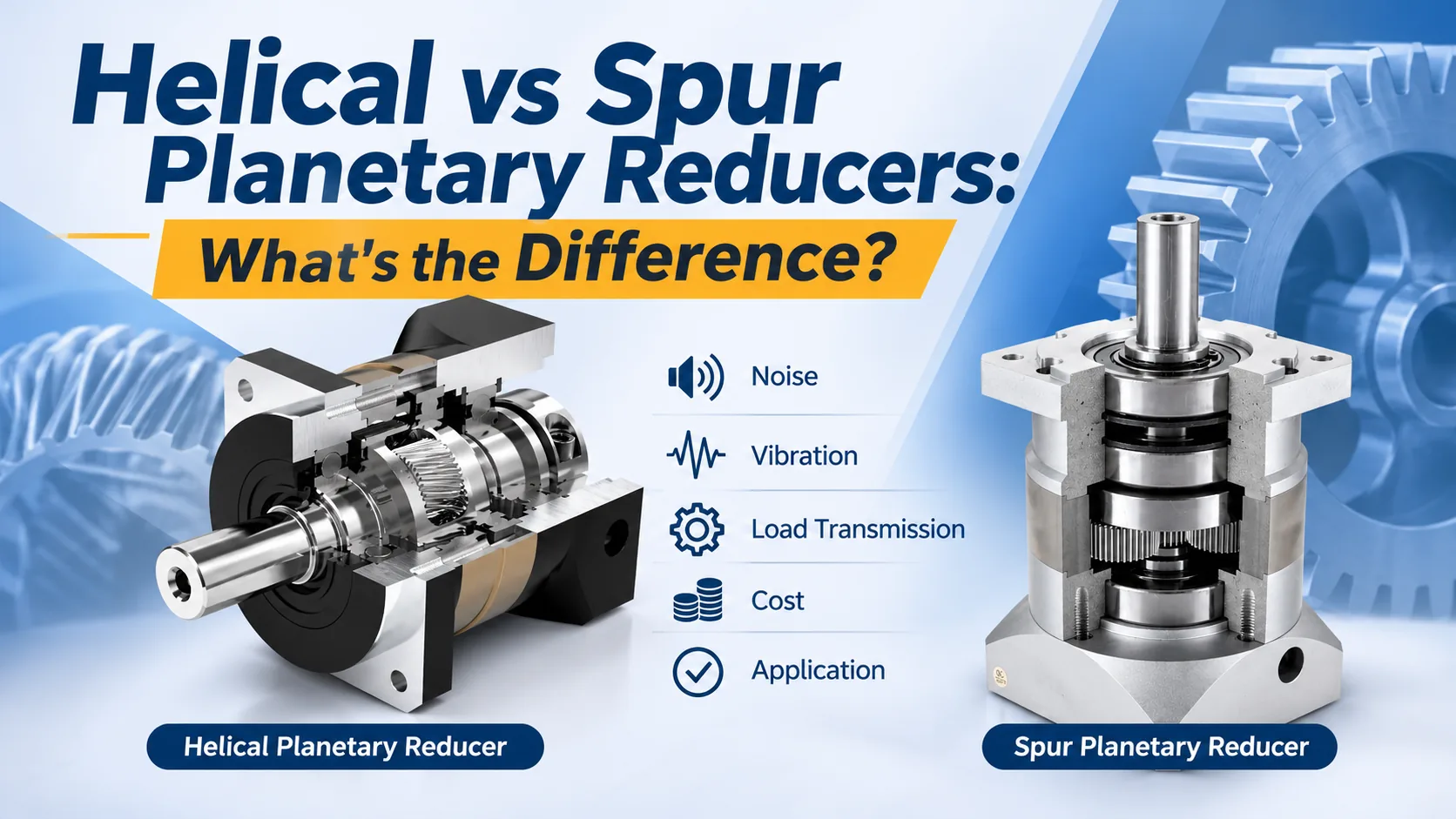
Spur and helical gears are two common designs used in planetary gearboxes. The main difference lies in the direction of their teeth and how they engage during operation.
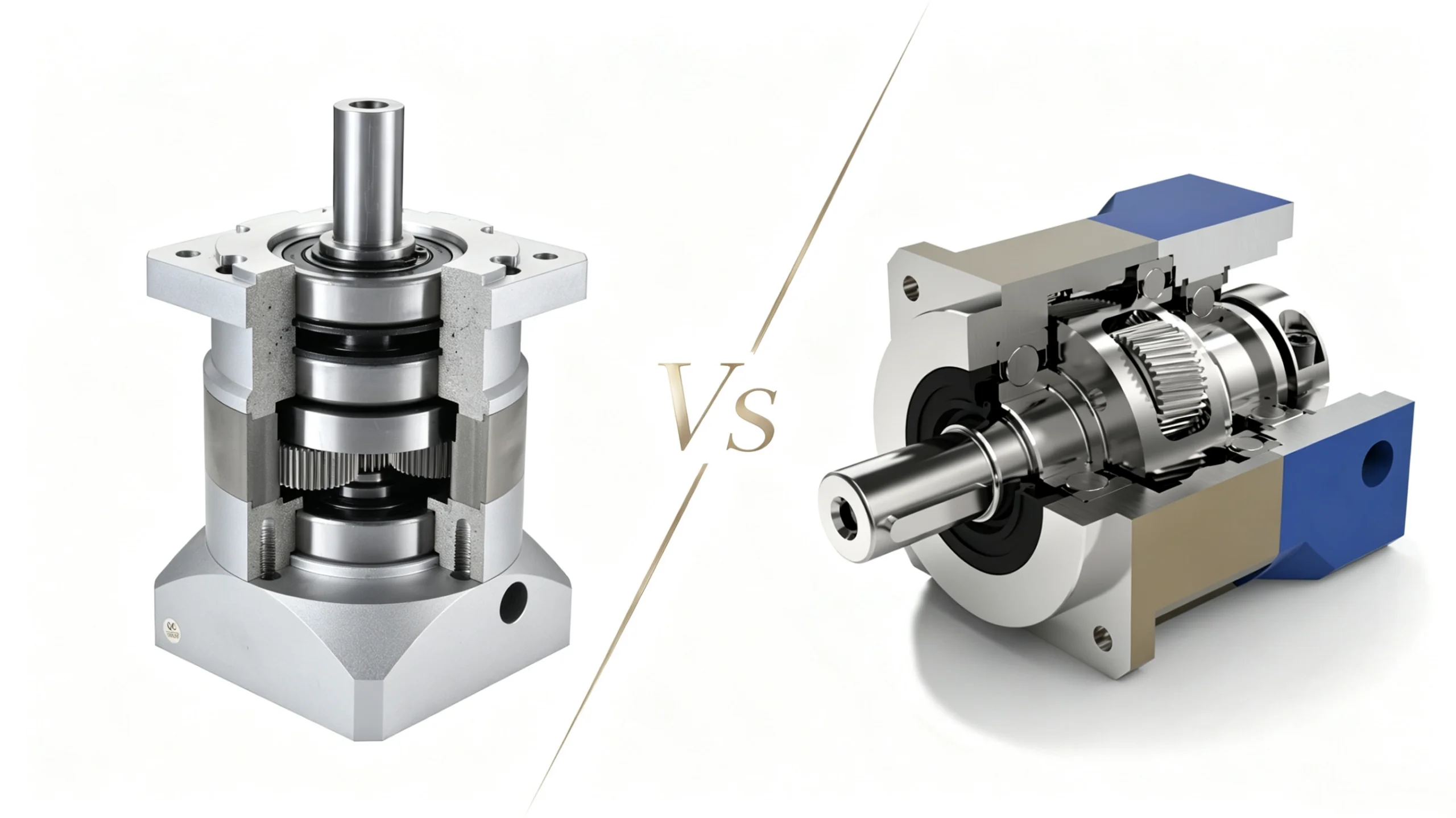
Spur gears have straight teeth and engage across the tooth width simultaneously. Helical gears have angled teeth that enter contact progressively. This difference affects noise, vibration, axial forces, and the overall design of the gearbox.
Neither design is suitable for every application. The right choice depends on operating speed, load conditions, noise requirements, and budget.
Helical vs Spur Gears: How Do They Differ?
The most noticeable difference between the two designs is their tooth geometry.
Spur Gears
Spur gears have straight teeth parallel to the gear axis. Their relatively simple geometry makes them easier to manufacture and generally more economical.
Because the teeth engage across their width at nearly the same time, spur gears can produce more noticeable meshing noise and vibration, particularly at higher speeds. They also avoid the axial thrust generated by helical gear engagement.
For applications with moderate speed and less demanding noise requirements, spur planetary reducers can be a practical choice.
Helical Gears
Helical gears have teeth cut at an angle to the gear axis. As the gears rotate, contact develops progressively rather than occurring across the entire tooth width at once.
This gradual engagement generally produces smoother transmission and lower meshing noise. It can also increase the contact ratio, allowing more than one pair of teeth to share the transmitted load during operation.
However, the angled teeth generate axial forces that must be considered in the gearbox design. Bearing arrangement, lubrication, and internal structural support all affect the final performance.
Helical planetary reducers are often preferred for applications requiring quieter operation and smoother torque transmission.
Comparing Helical and Spur Planetary Reducers
The following table summarizes the main differences. Actual performance depends on gear quality, gearbox design, manufacturing accuracy, and operating conditions.
| Comparison | Helical Planetary Reducer | Spur Planetary Reducer |
|---|---|---|
| Tooth direction | Angled teeth | Straight teeth |
| Gear engagement | Progressive | Near-simultaneous across tooth width |
| Operating noise | Generally lower | Generally higher |
| Vibration | Typically smoother meshing | More noticeable meshing impact |
| Axial force | Generates axial thrust | No axial thrust from the gear mesh |
| Manufacturing | More complex | Relatively straightforward |
| Cost | Generally higher | Generally lower |
| Typical applications | Servo-driven automation, robotics, precision machinery | General machinery, basic material handling, cost-sensitive equipment |
One important point: helical gears do not automatically provide lower backlash or higher positioning accuracy.
Backlash is also determined by gear manufacturing tolerances, assembly quality, bearing arrangement, and gearbox adjustment. If positioning accuracy is a priority, check the specified backlash value rather than choosing a gearbox based on tooth type alone.
Which Gear Type Is Better for Your Application?
The application should determine the gear design, rather than assuming one type is always better.
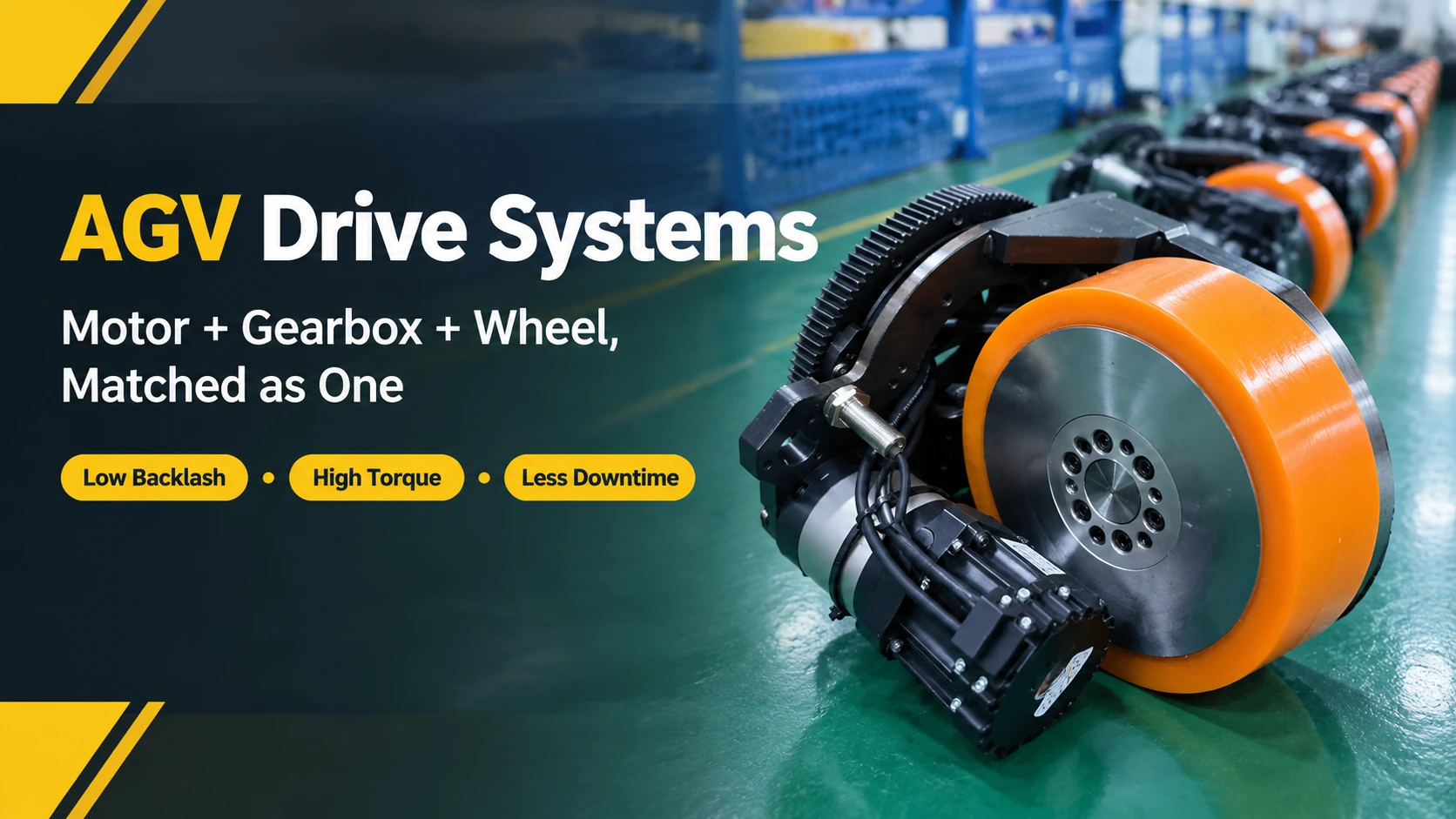
AGVs frequently operate with repeated acceleration, deceleration, and changes in direction. Gearbox noise and smooth torque transmission can be important, especially in indoor logistics environments.
A helical planetary reducer may be worth considering when quieter operation and smooth motion are priorities. However, the selection should also account for vehicle load, wheel diameter, required speed, acceleration torque, and operating slope.
For simpler handling systems with moderate speed and less demanding noise requirements, a spur planetary reducer may also be suitable.
2. Servo-Driven Automation Equipment
Servo applications often require controlled acceleration, frequent start-stop cycles, and accurate positioning.
In these systems, engineers should consider both gear engagement characteristics and the gearbox’s actual backlash specification. A helical design can help achieve smoother transmission, but the motor, coupling, mounting structure, and reducer must work together to meet the positioning requirements.
3. General Industrial Machinery
For conveyors and other equipment with relatively straightforward motion requirements, spur planetary reducers can offer a practical balance between cost and performance.
If operating noise, vibration, or higher transmission smoothness becomes a concern, a helical design may be worth evaluating.
What Should You Check Before Selecting a Planetary Reducer?
Gear type is only one part of gearbox selection. Before confirming a model, check the following parameters:
- Rated and peak output torque: Confirm that the reducer can handle both continuous operating loads and short-term peak loads during acceleration or sudden changes in resistance.
- Reduction ratio and output speed: Make sure the selected ratio matches the motor speed and the required machine output speed.
- Backlash requirements: Check the allowable angular play at the output, particularly for positioning applications.
- Radial and axial loads: For wheel-driven systems and cantilevered mechanisms, external loads on the output shaft need to be considered alongside transmitted torque.
- Operating conditions: Consider working cycles, ambient temperature, installation orientation, lubrication, and available mounting space.
- Motor compatibility: Check the motor flange, shaft dimensions, mounting interface, and allowable input speed.
For customized equipment, sharing the motor drawing and installation dimensions with the gearbox manufacturer before ordering can help avoid fitting problems during assembly.
Understanding the Trade-Offs of Helical Planetary Reducers
Although helical gears offer advantages in noise and transmission smoothness, they also introduce design considerations.
The axial thrust generated by angled teeth places additional demands on the gearbox’s bearing arrangement. The internal structure must be designed to support these forces under the intended operating conditions.
Helical gear engagement also involves sliding contact, which can introduce additional friction losses. Actual transmission efficiency depends on gear geometry, materials, lubrication, and manufacturing quality.
Cost is another consideration. Helical gears generally require more complex manufacturing and processing, which can increase the gearbox price.
For this reason, upgrading from a spur to a helical planetary reducer is not always necessary. If the existing system already meets its torque, noise, speed, and accuracy requirements, a spur design may remain the more economical option.
Frequently Asked Questions
Q: Are helical planetary reducers quieter than spur models?
A: Generally, yes. The progressive tooth engagement of helical gears reduces the sudden impact associated with spur gear meshing. However, overall gearbox noise also depends on manufacturing accuracy, assembly, lubrication, and operating speed.
Q: Do helical planetary reducers have lower backlash?
A: Not necessarily. Backlash depends on gear accuracy, assembly tolerances, bearing arrangements, and gearbox design. Both helical and spur planetary reducers can be manufactured with different backlash specifications.
Q: Are spur planetary reducers suitable for AGV applications?
A: Yes. Spur planetary reducers can be used in AGV drive systems where operating speed, load, noise, and positioning requirements are within the gearbox’s capabilities. The final selection should be based on the vehicle’s actual operating conditions.
Q: Why are helical planetary reducers generally more expensive?
A: Their angled tooth geometry involves more complex manufacturing and processing. The bearing arrangement must also accommodate axial forces, which can add to the overall design and production cost.
Q: Which planetary reducer is better for servo motors?
A: Both types can be paired with servo motors. The choice depends on required backlash, output torque, operating speed, noise limits, and motion profile. For applications requiring smooth transmission and low noise, a helical planetary reducer is often worth considering.