What Is an AGV Differential Drive Wheel System?
An AGV differential drive wheel system relies on speed differences between independent motors to steer. Industrial automated guided vehicles use this setup for flexible material handling in tight shop floors.
Engineers typically select between two main differential configurations. Dual steering systems assign individual driving and steering motors to each wheel, enabling universal direction changes. Dual differential systems connect two drive assemblies through slewing bearings, turning the vehicle purely through speed adjustments between inner and outer wheels.
Key Components and Their Impact on AGV Drive Performance
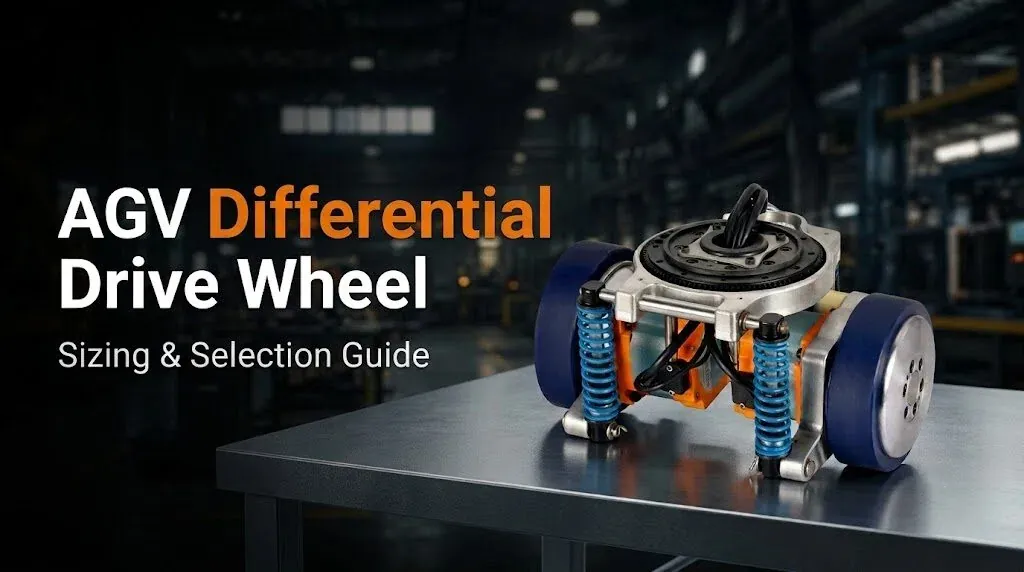
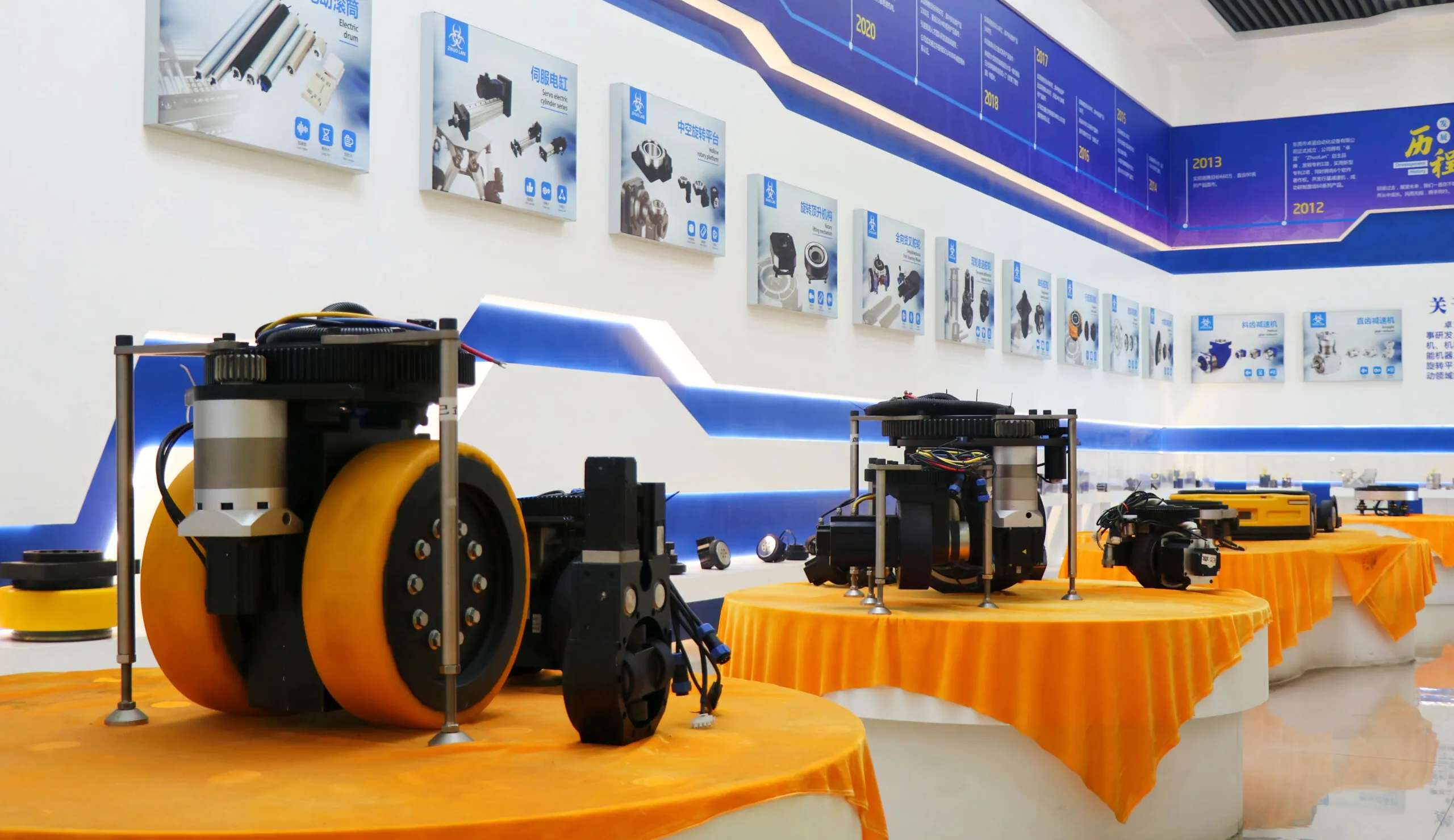
A heavy-duty drive wheel assembly integrates key electrical and mechanical parts into a robust unit. Each component directly influences speed, stability, and load capacity.
- Servo Motor: Provides controlled dynamic torque and precise encoder feedback. It establishes smooth acceleration curves and prevents positioning errors during automated motion.
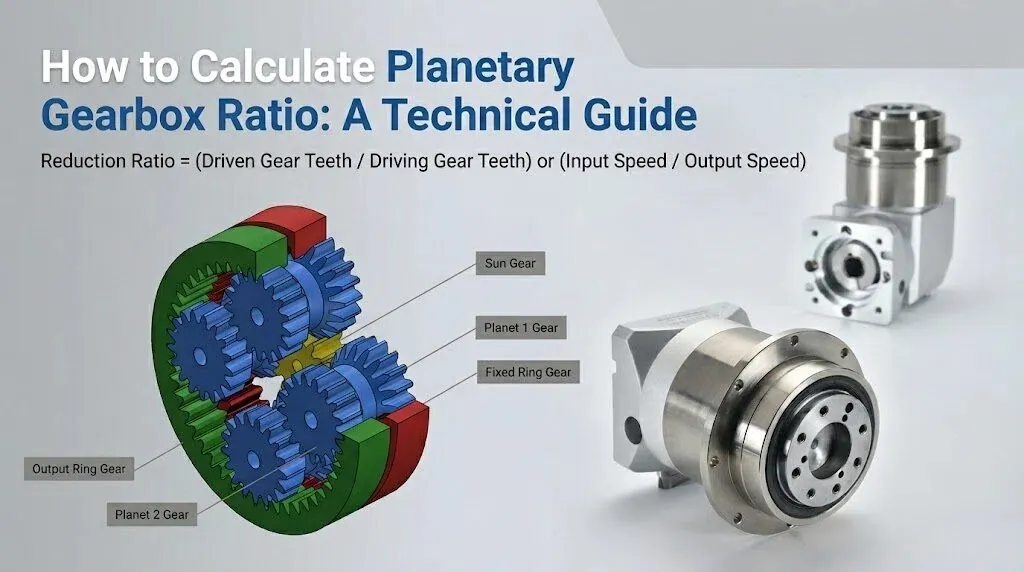
- Planetary Gear Reducer: Increases torque output while maintaining a compact physical footprint. A high-precision planetary gear reducer for AGV units minimizes backlash, protecting the motor against shock loads during sudden stops.
- Polyurethane Wheel Ring: Delivers essential grip while absorbing floor vibrations. Heavy-duty polyurethane resists surface abrasion and carries massive vertical loads without permanent deformation.
- Slewing Bearing: Connects the drive assembly to the vehicle chassis. It handles multi-directional forces during turns and isolates the motor shaft from raw load impacts.
- Suspension Cylinder: Uses hydraulic or spring force to maintain continuous tire contact with ground surfaces. It balances weight across all wheels and prevents loss of traction on uneven floors.
How Differential Steering Works in Heavy-Duty AGVs
Differential motion uses rotational speed gaps to maneuver vehicles without mechanical steering linkages.
Straight-Line Motion Mechanics
To move straight, the vehicle controller commands equal rotational speeds to both driving motors. Synchronized wheel rotation creates equal traction, driving the vehicle forward in a straight line through warehouse corridors.
Zero-Radius Turning Dynamics
To execute turns, the controller changes relative wheel speeds based on differential kinematics.
Slowing down the inside wheel while accelerating the outside wheel forces the vehicle to curve smoothly. Reversing one wheel while driving the opposite wheel forward creates a zero-radius pivot turn. This kinematic approach maintains high trajectory precision without complex mechanical linkages.
Key Applications for AGV Differential Drive Wheels
Differential assemblies offer exceptional dynamic control at a competitive cost point. They serve critical roles across several industrial environments:
- Automotive Assembly: Transporting heavy engine blocks and vehicle frames through tight production bays.
- Intralogistics Warehouses: Moving goods through narrow aisles in automated storage facilities.
- Heavy Machinery Plants: Handling heavy structural metal components between machining stations.
Engineering Guide: How to Size Your AGV Drive Wheel Step-by-Step
Follow these seven engineering steps to size an AGV differential drive wheel correctly.
- Calculate total gross vehicle weight by adding frame weight to peak payload.
- Determine single wheel load using adequate engineering safety factors.
- Calculate rolling resistance force on flat shop floors.
- Compute required output torque for straight driving.
- Select a gear ratio for the planetary gear reducer for AGV units.
- Calculate static pivot resistance torque during zero-radius turning.
- Add straight torque and pivot torque together to size the motor capacity.
Real-World Engineering Example: Sizing a 6-Ton AGV
Let us analyze a 6-ton rated AGV measuring 4000 mm long by 2500 mm wide.
Step 1: Payload and Wheel Load Assessment
The structural frame weighs 2 tons, yielding a gross weight of 8 tons.
Using four drive wheel units, nominal load reaches 2 tons per wheel. Applying a 1.5 safety factor requires selecting an AGV differential drive wheel rated for 3 tons.
Step 2: Straight Traction Force Calculation
Assume rolling friction coefficient u = 0.02, gravity g = 9.8 m/s², wheel radius R = 0.15 m, and speed V = 500 mm/s.
Traction force per wheel: F = u * m * g = 0.02 * 3000 * 9.8 = 588.6 N
Output torque needed for straight driving: M = F * R = 588.6 * 0.15 = 88.29 N·m
Using a gearbox reduction ratio i = 60 and efficiency η = 0.95, required motor torque is: T = M / (60 * 0.95) = 1.55 N·m
Adding a 20 percent safety margin gives: T_straight = 1.55 * 1.2 = 1.86 N·m
Step 3: Zero-Radius Pivot Resistance Torque
Ignoring pivot resistance often causes steering failure in heavy loads.
Assume floor pivot friction u_pivot = 0.3, wheel tire width L = 0.1 m, and assembly radius L1 = 0.3 m.
Single wheel pivot moment: M_pivot = (u_pivot * m * g * L) / 2 = (0.3 * 3000 * 9.8 * 0.1) / 2 = 441 N·m
Total pivot resistance torque for two wheels: M_total = 2 * M_pivot = 882 N·m
Force needed to overcome pivot torque: F1 = M_total / (2 * L1) = 1470 N
Additional motor torque required for turning: T1 = (F1 * R / (60 * 0.95)) * 1.2 = 4.6 N·m
Total required motor torque: T_total = T_straight + T1 = 1.86 + 4.6 = 6.46 N·m
A 48V DC brushless servo motor offering 6.5 N·m peak torque will perform reliably.
Trade-Offs and Limitations of Differential Drive Assemblies
Differential drive units provide rapid dynamic response and lower structural costs. However, engineers must plan for specific operational limits.
Slippery ground conditions or uneven floors can cause drive wheel slippage, affecting navigation accuracy. High-speed travel can cause minor vehicle vibration. Pivot turning subjects polyurethane tires to heavy lateral friction, accelerating surface wear over time.
Integrating spring suspension systems and high-rigidity gearboxes effectively mitigates ground irregularities.
Partner with Experts for Custom AGV Drive Solutions
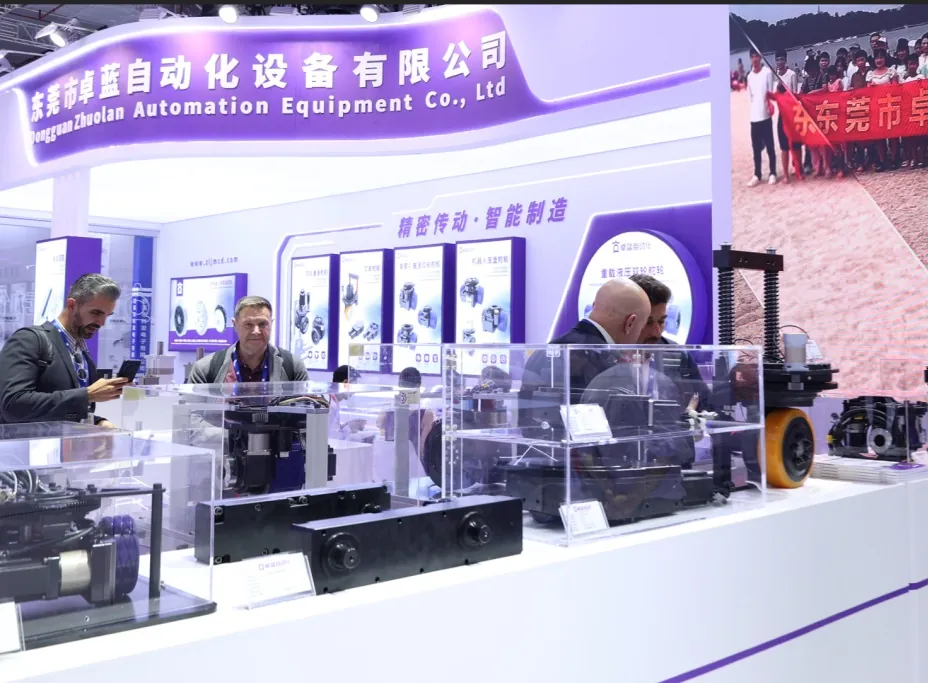
Selecting the right drive components requires balancing load requirements, motor torque, and floor conditions. As a core distributor for Zhuolan, Houzai provides complete electro-mechanical drive solutions for industrial automation. We supply matched servo motors, high-precision planetary gearboxes, and robust wheel assemblies built for demanding operating conditions.
Contact our technical sales team today to request custom torque calculations, CAD model drawings, or a tailored product quotation for your automation project.
Frequently Asked Questions About AGV Differential Drive Wheels
What causes an AGV differential drive wheel to slip on factory floors?
Slippage occurs when floor friction drops due to dust, oil, or uneven surface contact. Adding spring suspension cylinders keeps uniform contact pressure across drive wheels.
Why is pivot turning torque higher than straight driving torque?、
Pivot turning forces tire rubber to twist directly against floor surfaces. Static friction during pivoting exceeds normal rolling resistance by several times.
How do I select the right planetary gear reducer for AGV applications?
Select gearboxes offering high torsional rigidity, low backlash, and high efficiency. Proper reduction ratios reduce motor torque requirements while maintaining target operational speeds.