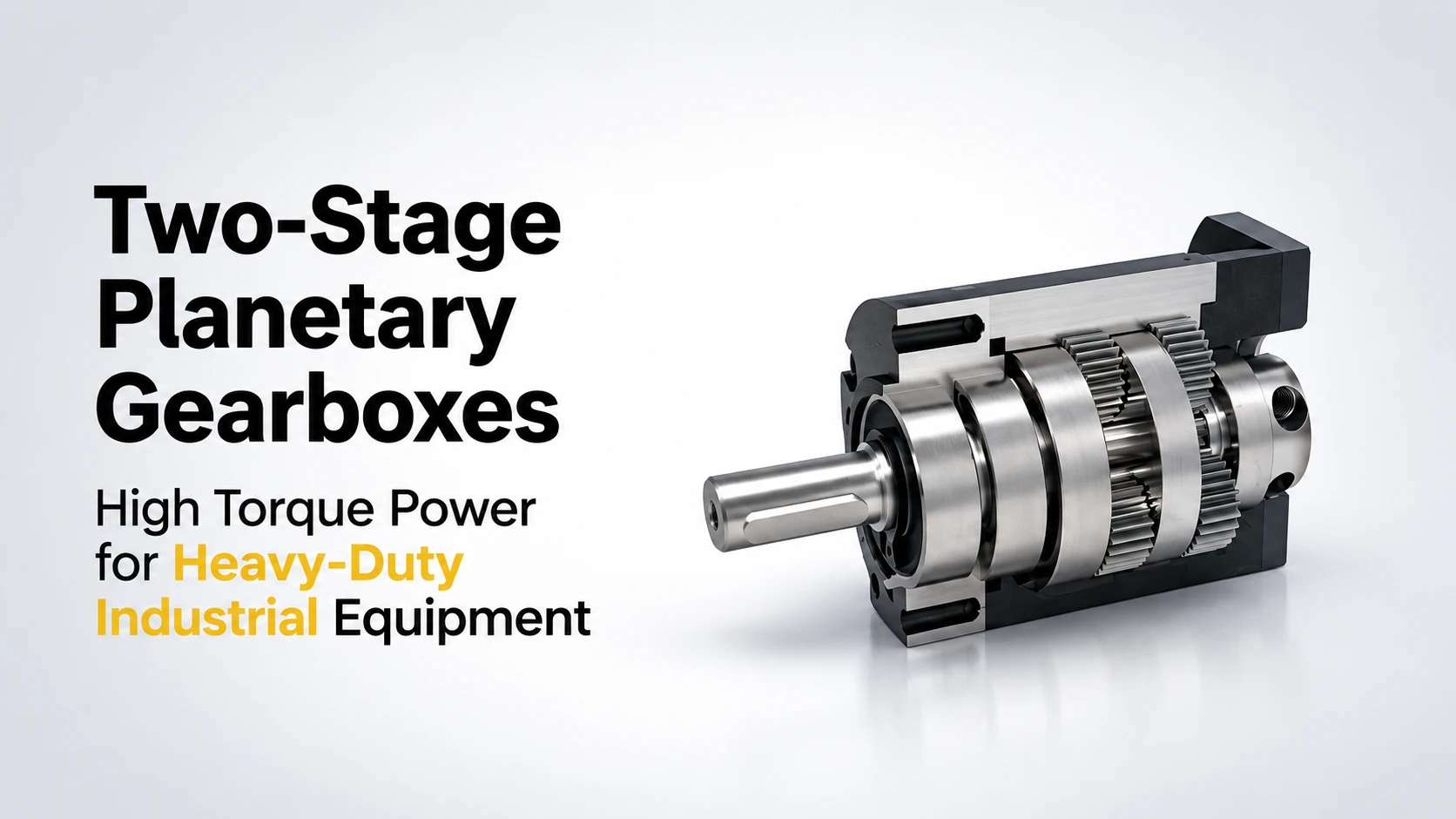
Common AGV Navigation Pain Points
Many automated guided vehicles suffer from poor tracking — a problem often traced back to the AGV wheel setup. They drift away from paths during straight travel. They slip during tight turns. These issues often stem from incorrect wheel choices. Incorrect setups cause bad docking precision. Factory floors require exact movements. Even a tiny error disrupts production lines. Choosing the wrong components leads to frequent downtime. Engineers often blame the software first. However, the root cause is usually mechanical.
The Core Rule of Wheel Selection
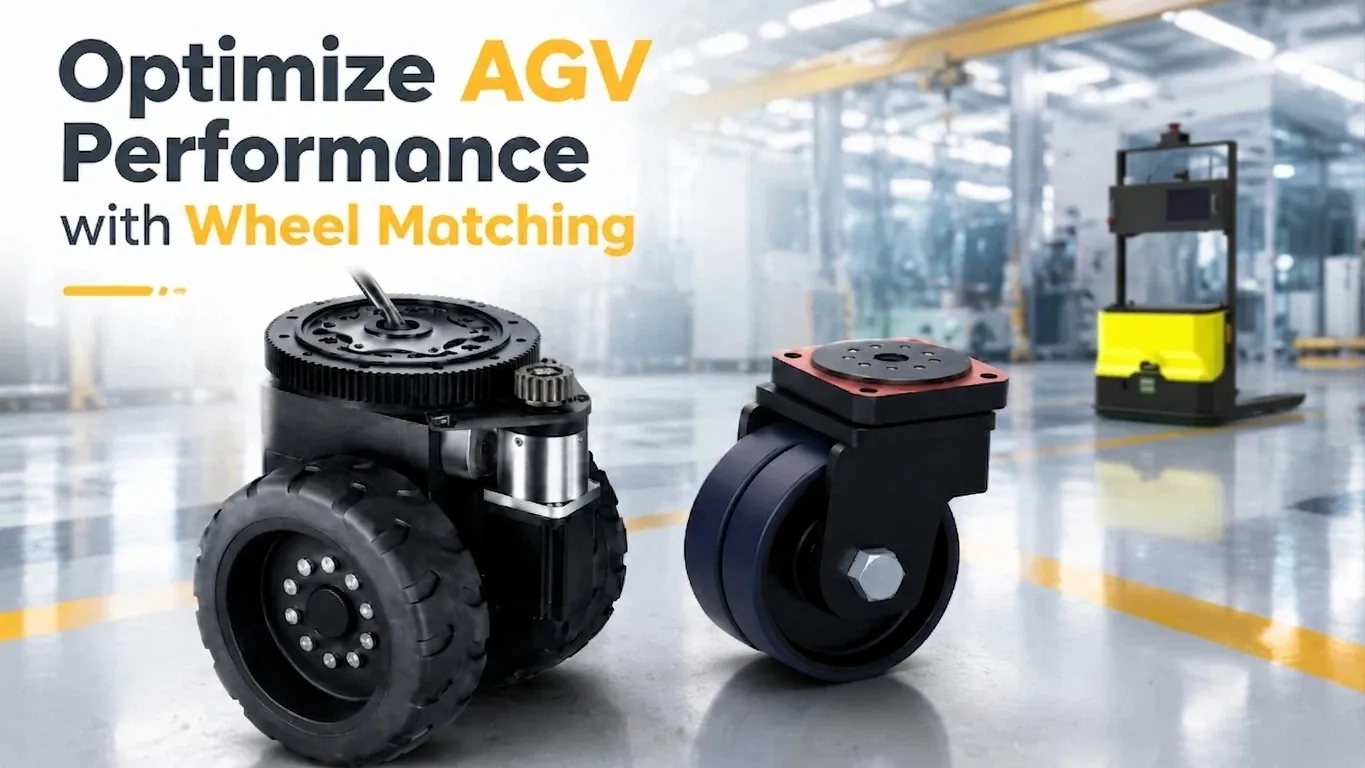
A proper AGV wheel layout requires balancing traction and resistance. Drive wheels must grip the floor firmly. Driven casters must roll with minimal resistance. This balance ensures high navigation accuracy. Houzai provides expert guidance to achieve this balance. As the core agent for Zhuolan, we deliver reliable solutions. Our components offer premium quality at competitive prices. We focus on your industrial automation needs.
Technical Principles of Wheel Matching
Understanding how wheels interact is critical for automation success. Here we analyze the main components based on industry safety standards like ISO 3691-4.
Drive Wheel Layouts
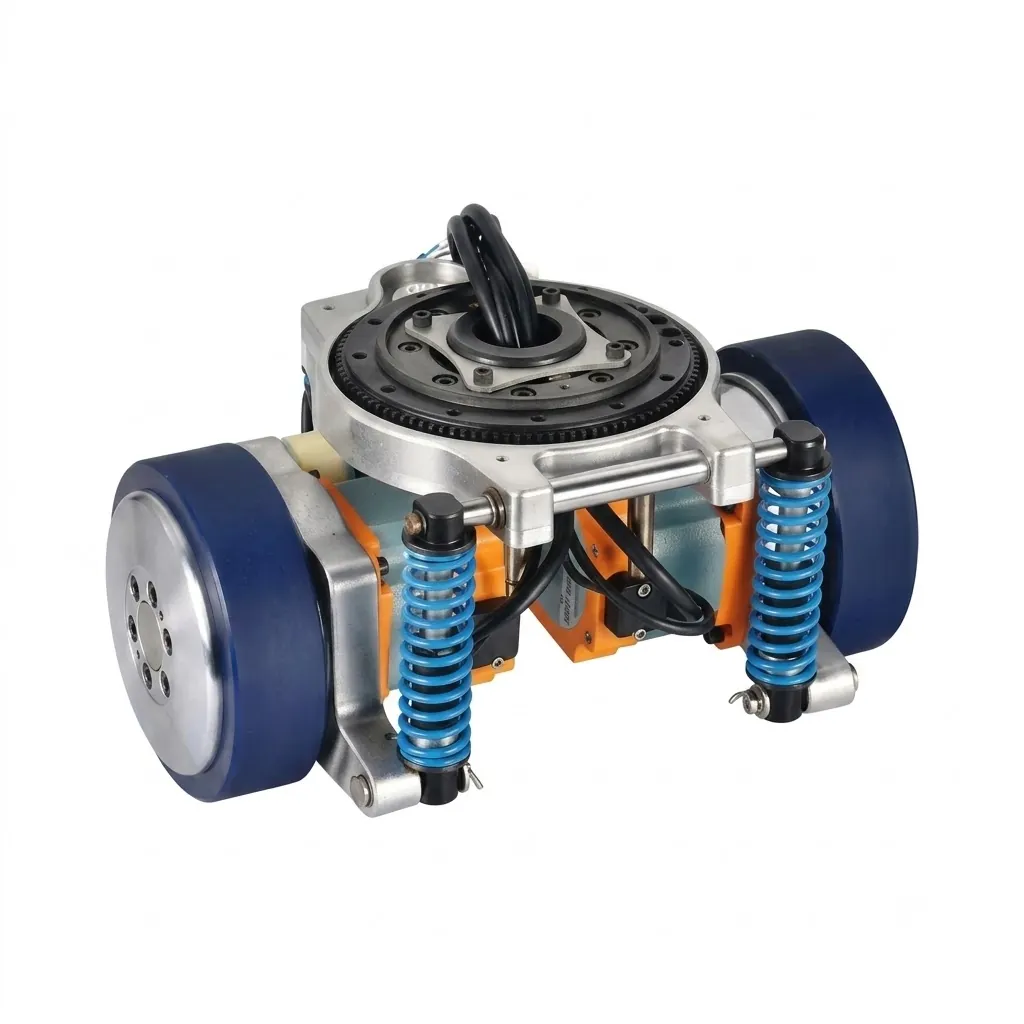
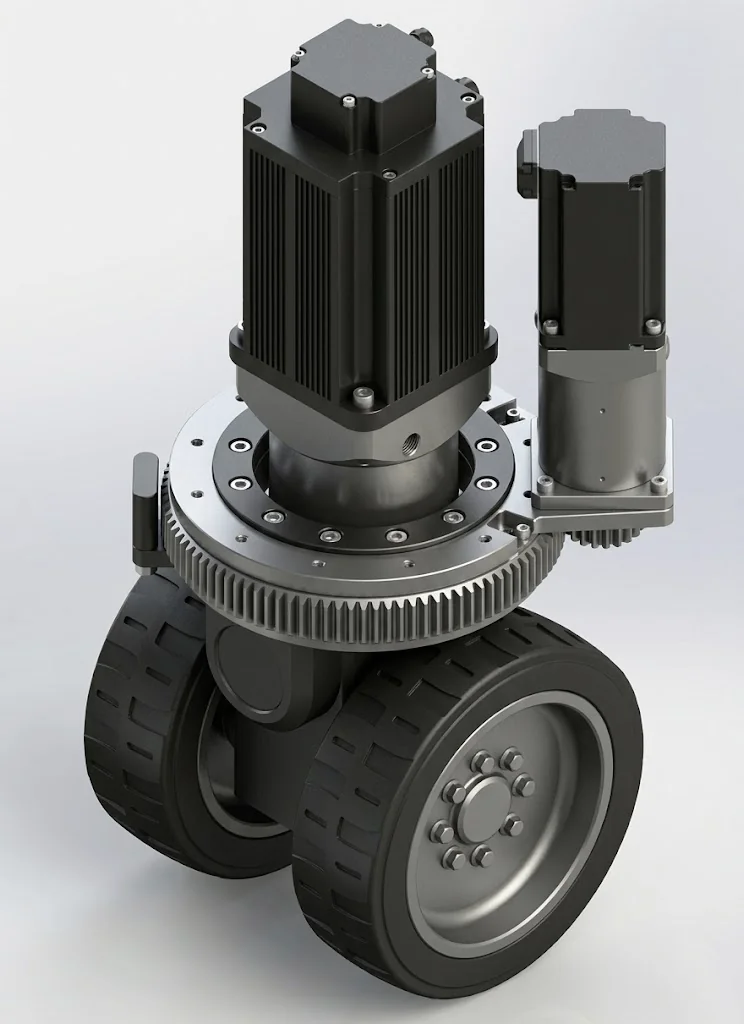
Drive wheels use integrated motors to move the vehicle. They also contain compact gearboxes. The placement of these wheels dictates how the vehicle steers.
A single center drive wheel with two casters is highly cost effective. This three-wheel setup simplifies the control system. However, it may slip during pivot turns.
Dual drive wheel setups offer superior steering accuracy. They place two drive wheels on opposite sides. The system uses differential speed to change direction. They cost more but control direction perfectly. This setup allows the vehicle to rotate on the spot.
Caster Performance Metrics
Casters handle steering and load support. High rolling resistance wastes drive power. The drive wheel must work harder to overcome caster friction.
Uneven wear changes the resistance on each side. This imbalance forces the vehicle off its path. Casters need low resistance and fast response to side forces. When the vehicle turns, casters must swing instantly. Any delay alters the turning path. Precision casters prevent these sudden directional deviations.
Material Engineering
Material choice affects performance. Drive wheels require high friction to transmit torque. Polyurethane with a hardness of Shore A 70 to 85 works best. Softer wheels deform and reduce travel accuracy. Harder wheels slip on sloped ramps.
Casters can use harder polyurethane to minimize rolling resistance. Nylon is another option. It offers the lowest resistance on clean floors. However, nylon has low friction. It may cause the vehicle to skid during emergency braking. Polyurethane represents the perfect middle ground. It balances low resistance with safe braking friction.
Steps to Match AGV Wheels
Here are six steps to design a stable wheel system.
- Select the layout based on your accuracy needs.
- Choose polyurethane for drive wheels to ensure strong grip.
- Use harder polyurethane for casters to lower resistance.
- Use dowel pins and bolts for caster installation.
- Add electromagnetic brakes to casters for heavy loads.
- Keep drive wheels slightly larger than casters for ground clearance.
Proper installation is vital. A mounting error above 0.5 degrees causes severe drift. Do not rely on bolts alone. Bolts have small clearance gaps. Always use locating pins to secure the position.
Real World Alignment Case Study
A manufacturing facility noticed their AGV drifted on straight paths. The navigation software showed no errors. The sensors functioned correctly. Our technical team inspected the hardware.
We found uneven lubrication in the caster bearings. One side had higher resistance than the other. This small friction difference pulled the vehicle sideways. Replacing them with Zhuolan precision casters fixed the tracking issue completely. The system achieved perfect docking accuracy again. Houzai provided the replacement parts and technical support quickly.
Limitations of Layout Designs
No single layout fits every environment. Single drive systems struggle on uneven floors. They require flat surfaces to prevent slipping. Dual drive systems increase control system complexity. They demand advanced programming skills. Heavy loads require specialized braking systems on all wheels. High speeds demand premium materials to prevent rapid wear.
Frequently Asked Questions
Why does my AGV slip during pivot turns?
Single drive wheels often slip if the floor is smooth or oily. Dual drive setups prevent this problem entirely.
Can I use standard industrial casters on AGVs?
No. Standard casters have too much mechanical play. AGVs need high precision casters to prevent path deviation.
How does wheel alignment affect navigation?
An installation error above 0.5 degrees causes severe drift. Secure your casters with dowel pins.
What is the best material for drive wheels?
Polyurethane with Shore A 70 to 85 hardness offers the best balance of friction and load capacity.
Does Houzai offer complete drive solutions?
Yes. Houzai provides gearboxes, motors, and casters. We offer a one-stop technical service.