Selecting the ideal speed reducer for heavy machinery remains a persistent technical hurdle for equipment engineers. Modern industrial equipment must deliver tremendous mechanical power while occupying minimal factory floor area. Single planetary gear sets often fail to provide the extreme reduction ratios required for heavy automation duties. Operating machinery with inadequate torque output leads to motor strain, thermal overload, and unexpected production downtime.
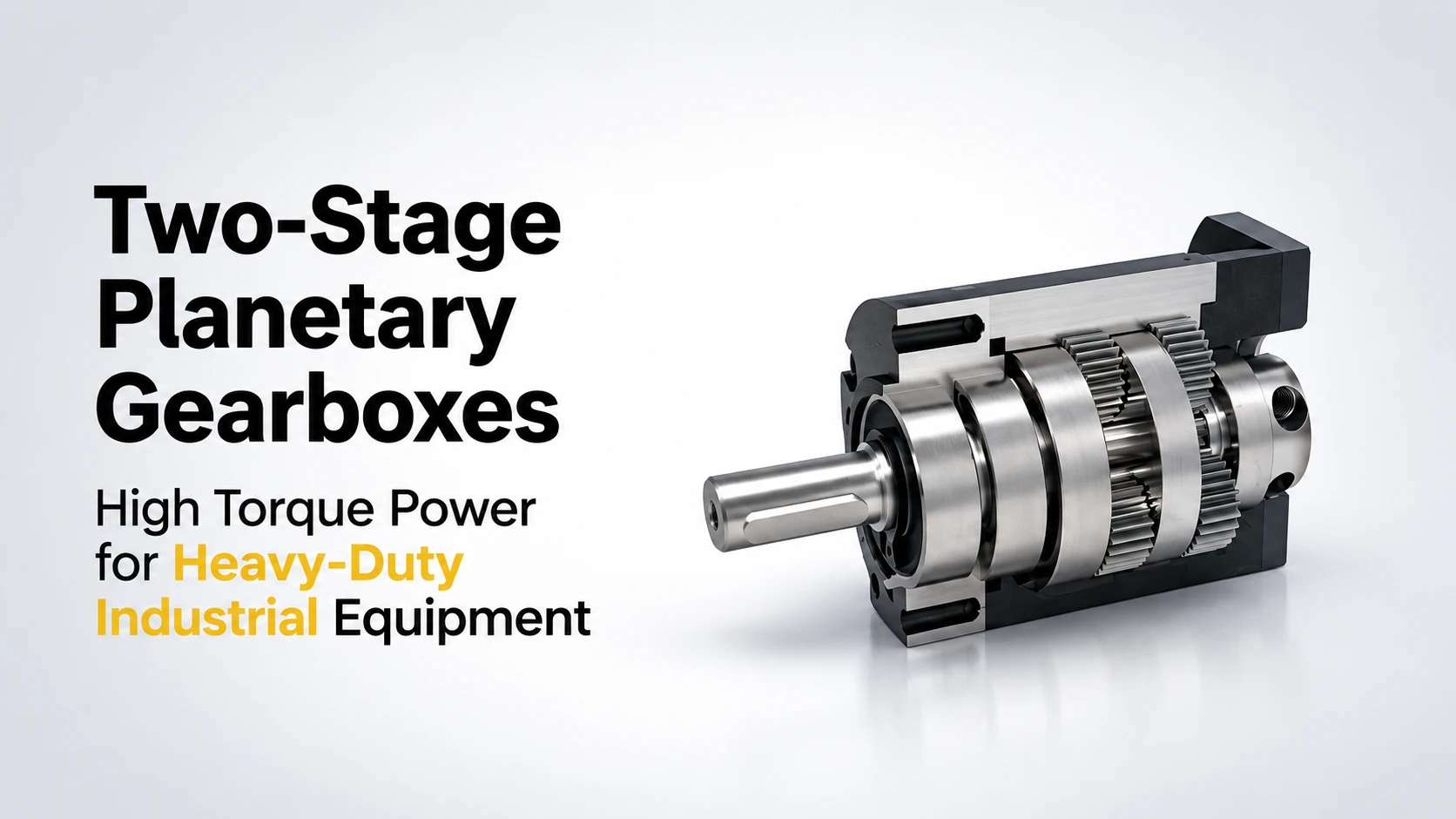
Engineers who need compact power transmission often turn to a two stage planetary gearbox. Combining two sequential planetary gear sets within a single housing allows these systems to achieve dramatic reduction ratios ranging from 10:1 up to 100:1. This structural arrangement dramatically increases output torque while maintaining high operational efficiency and excellent spatial economy.
The Challenge of High Torque in Tight Spaces
Modern industrial automation requires compact power transmission solutions to keep equipment footprints small. Design engineers frequently encounter strict dimensional boundaries when building automated guided vehicles, robotic arms, and heavy material conveyors.
Balancing Power Density and Space Constraints
Industrial drive motors generally produce maximum power at elevated rotational speeds. Delivering this output to heavy industrial loads requires converting high motor speed into usable mechanical torque. Traditional fixed axis gear reducers rely on large pitch diameters and expansive gear trains. This layout makes them too bulky for space constrained machine frames.
Common Drive System Pitfalls
Selecting an oversized single stage gearbox to boost torque creates severe spatial conflicts during machine assembly. Conversely, undersizing the gearbox leads to premature gear tooth wear, excessive shaft deflection, and sudden tooth fractures under peak loads. Industrial operations require high mechanical torque alongside strict spatial efficiency.
When to Upgrade to a Two Stage Planetary Gearbox
A two stage planetary gearbox becomes necessary when mechanical applications exceed the physical capabilities of single stage speed reducers.
Two Stage Planetary Gearbox Power Flow
1. Motor Input
1st Sun Gear
→
2. First Stage
Planet Gears & Carrier
→
3. Second Stage
2nd Sun & Planet Gears
→
4. Final Output
High Torque Drive
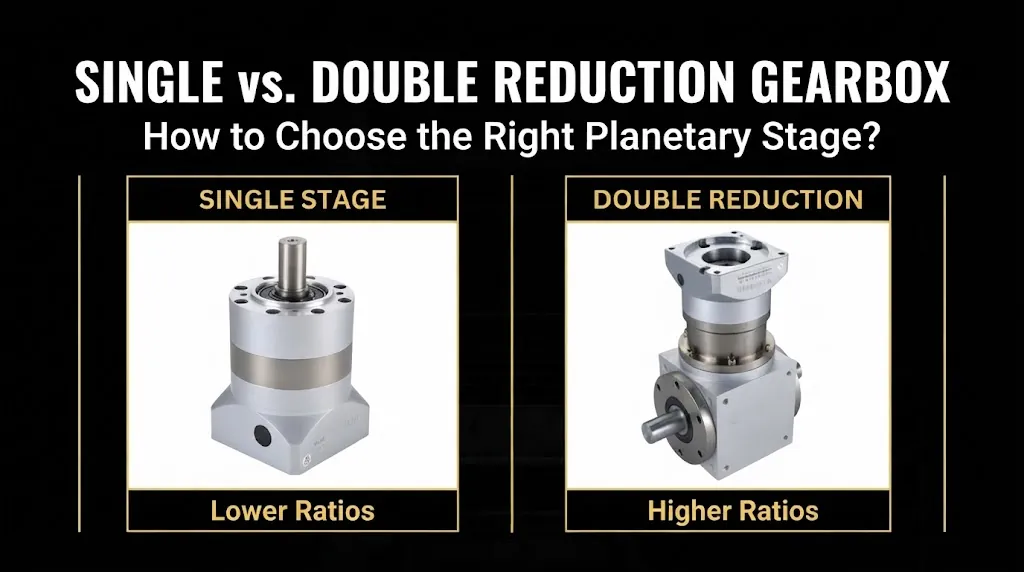
Demanding High Reduction Ratios Between 10:1 and 100:1
Single planetary stages typically offer practical speed reduction ratios between 3:1 and 10:1. When an application demands speed reduction ratios above 10:1, single stage gear sets suffer from physical manufacturing constraints and reduced structural strength. Connecting two planetary sets in series provides high reduction ratios reaching 100:1 while preserving structural integrity. Learn more about gear standards from the ISO Gear Technical Committee Standards.
| Performance Metric | Single Stage Gearbox | Two Stage Gearbox |
|---|---|---|
| Reduction Ratio Range | 3:1 to 10:1 | 10:1 to 100:1 |
| Mechanical Torque Output | Moderate | Exceptional |
| Mechanical Efficiency | Around 97% | 94% to 96% |
| Shaft Orientation | Coaxial | Coaxial |
Handling Heavy Duty Torque and Sudden Shock Loads
Heavy material handling, cranes, and crushing machinery experience dramatic load fluctuations. A two stage planetary gearbox distributes incoming mechanical stress across multiple planet gears simultaneously. This power split design boosts load capacity and helps the drive withstand sudden shock forces. Detailed gear teeth design criteria can be found in the AGMA Gear Rating Standards.
Ensuring Smooth Operation for Precision Automation
Precision manufacturing lines rely on constant motion and low mechanical vibration. Multi-tooth engagement in dual planetary stages reduces gear backlash and output ripple. This feature allows servo motors, stepper motors, and electric rollers to achieve high positioning accuracy during continuous automation cycles. Explore comprehensive drive system options at Houzai Industrial Transmission Solutions.
How Two Stage Planetary Transmission Works
Understanding the mechanical design of a two stage planetary gearbox highlights its unique operational benefits.
Dual Gear Set Design for Maximum Power Split
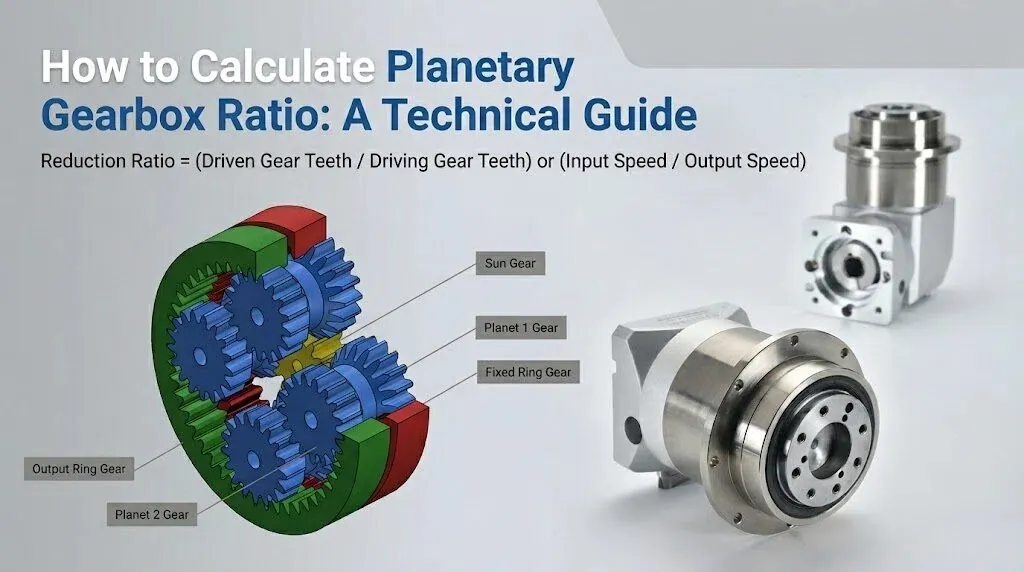
The central drive layout features a central sun gear, multiple planet gears, an outer ring gear, and a planet carrier. In a two stage unit, the primary stage carrier couples directly to the secondary stage sun gear. Mechanical power splits across several planet gears at each reduction level, distributing force across multiple gear teeth.
High Efficiency and Compact Coaxial Layout
Power division across two sequential gear sets minimizes mechanical stress on individual gear teeth. The input shaft and output shaft share the exact same central axis, simplifying machine layout. Despite driving through two separate gear stages, overall mechanical efficiency remains impressively high at 94% to 96%.
Key Steps for Selecting and Installing Your Gear Reducer
Proper drive selection and mounting practices ensure long operating life and reliable torque delivery.
5-Step Selection and Installation Checklist:
Step 1: Calculate Required Output Torque and Speed Ratios
Step 2: Evaluate Thermal Capacity and Work Environment
Step 3: Match Mechanical Dimensions and Shaft Interfaces
Step 4: Execute Proper Thermal Assembly Techniques
Step 5: Establish Regular Lubrication Maintenance
Step 1: Calculate Required Output Torque and Speed Ratios
Determine peak application torque and target output speed from input motor speed. Calculate target reduction ratio by dividing input speed by output speed. Always multiply baseline torque requirements by an appropriate application service factor to withstand unexpected operational spikes.
Step 2: Evaluate Thermal Capacity and Work Environment
Assess continuous operating temperatures and ambient humidity levels surrounding the installation site. Verify that the selected gearbox dissipates operational heat without exceeding maximum oil temperature bounds.
Step 3: Match Mechanical Dimensions and Shaft Interfaces
Check physical motor flanges, shaft diameters, and keyway slots against gearbox dimensions. Ensure output shaft radial load ratings match your external pulley or sprocket arrangements.
Step 4: Execute Proper Thermal Assembly Techniques
Never strike gearbox input or output shafts directly with hammers during installation. Direct mechanical blows fracture internal bearings and deform precision gear teeth. Use draw bolts into shaft end threads or heat couplings below 135 degrees Celsius for smooth assembly.
Step 5: Establish Regular Lubrication Maintenance
Change factory gear oil after the initial 500 to 1000 operating hours. Perform subsequent fluid refreshes every 5000 to 8000 hours using synthetic gear lubricants. Check oil levels regularly and inspect magnetic drain plugs for metallic particles.
Real World Industrial Drive Application Case
Heavy crane hoist drives require massive starting torque to lift raw material safely. A manufacturing facility upgraded its lifting winches by integrating Zhuolan two stage planetary gearboxes supplied by Houzai.
The dual stage arrangement delivered a 35:1 reduction ratio within a remarkably compact envelope. This upgrade allowed smooth hoist starting, eliminated load slippage, and increased overall crane lifting capacity by 28% without altering the existing hoist frame structure. Discover how these high value drive components integrate into automated guided vehicles at Houzai AGV Systems and Drives.
Design Constraints and Considerations
While double reduction planetary gearboxes deliver impressive torque density, engineers must evaluate specific operational limitations.
Understanding Mechanical Limits and High Speed Tradeoffs
These gearboxes involve higher structural complexity and precise machining tolerances. Additional gear meshes increase initial procurement costs compared to basic parallel shaft reducers. Furthermore, internal friction makes multi stage planetary drives less suited for high speed continuous spinning applications where speed reduction is minimal.
Frequently Asked Questions About Planetary Gearboxes
When should I choose a two stage gearbox over a single stage model?
Choose a two stage model when your target speed reduction ratio exceeds 10:1 or when required output torque surpasses single stage structural ratings.
How much mechanical efficiency is lost in a two stage planetary gearbox?
A single stage planetary gearbox operates near 97% efficiency. A two stage system retains high overall efficiency, typically delivering between 94% and 96% output power.
Can a two stage planetary gearbox handle servo motor inputs?
Yes, two stage planetary gearboxes pair effectively with servo motors, stepper motors, and electric rollers to deliver high dynamic response, low backlash, and exact positioning in automated machinery.