Overcoming Slope Slips and Cabling Issues in AGVs
Warehouse automation projects often face unexpected downtime on inclined ramps. Traditional split drive setups require separate control cabinets, long power cables, and multiple feedback wires. These long cable runs increase susceptibility to electromagnetic interference and signal delay. When heavy vehicles stop suddenly on a slope, slow brake response times can lead to mechanical slippage. Engineers require reliable industrial automation drive solutions that combine rapid dynamic response with high torque output in a compact chassis space.
Core Advantages of Unified Drive Architectures
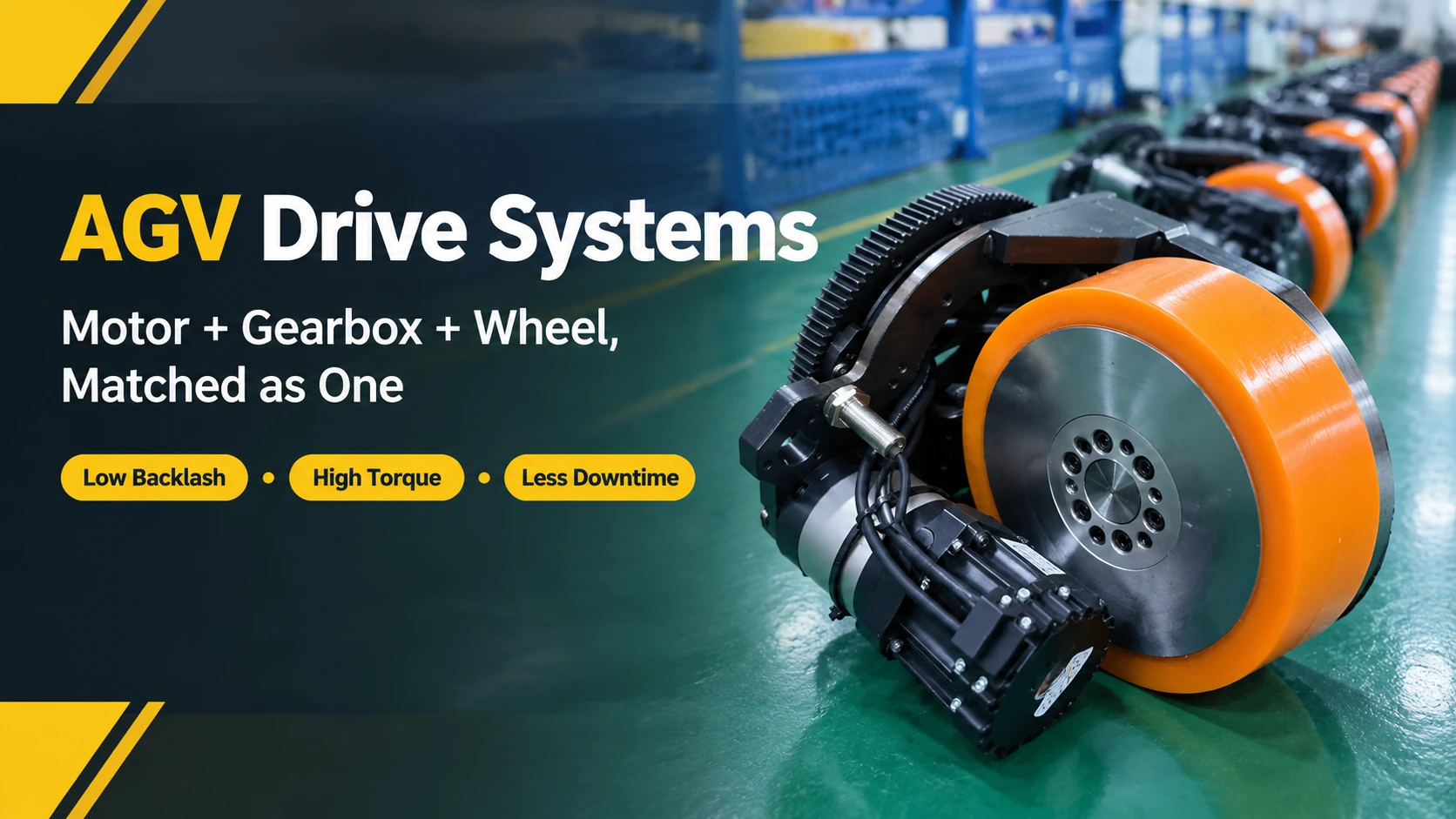
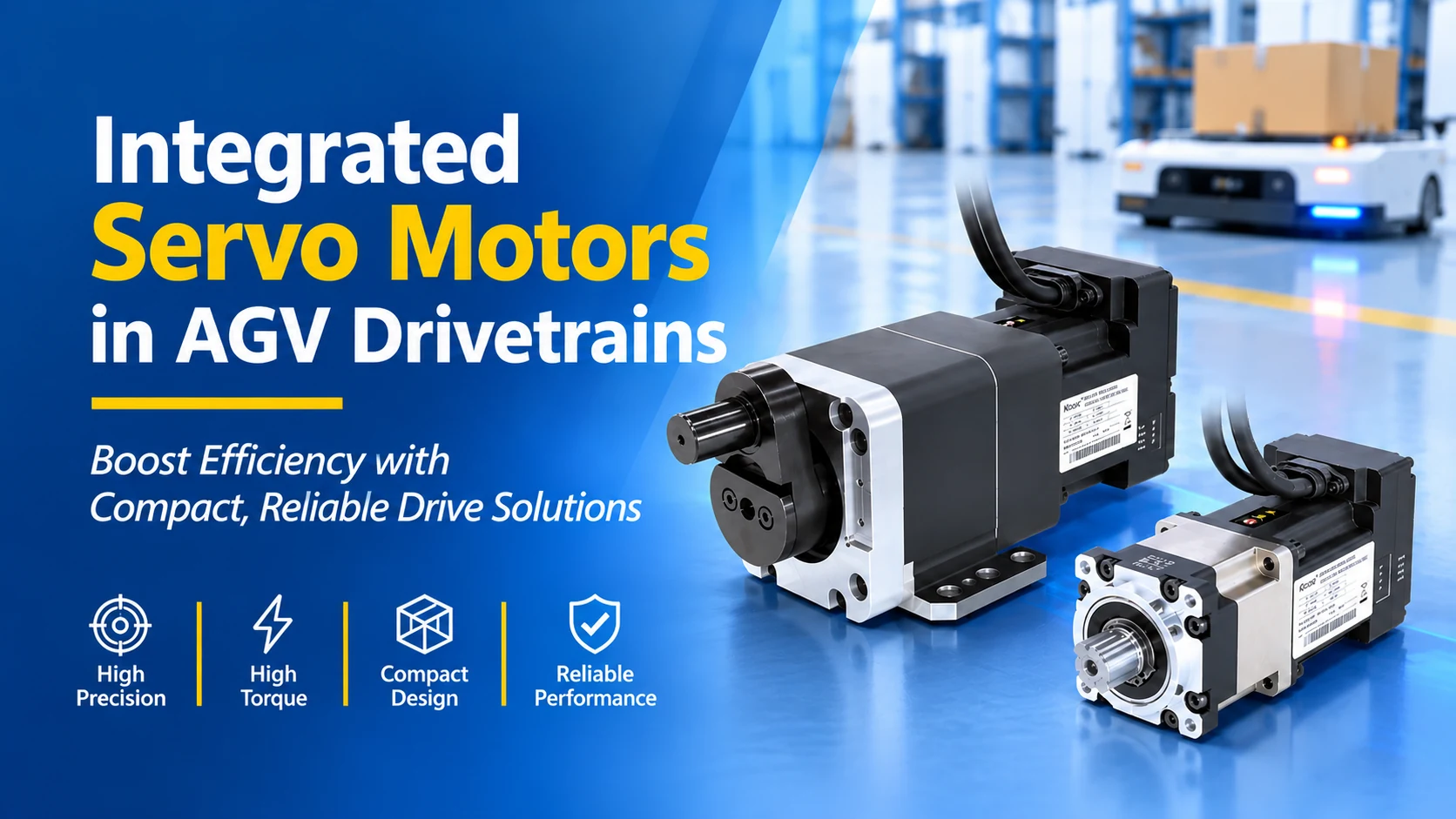
Adopting an AGV integrated servo motor resolves traditional space constraints and signal interference. By housing the motor, encoder, and drive controller in one sealed enclosure, manufacturers streamline internal layout and improve electrical efficiency. When paired with a precision planetary reducer, the drive module delivers smooth motion control, low backlash, and exact position tracking. This integrated setup offers high reliability for demanding material handling equipment.
Communication Bus Selection: CANopen vs EtherCAT
Selecting the right communication bus is critical for mobile robot performance. Engineers typically evaluate CANopen and EtherCAT based on system complexity and speed requirements. CANopen offers mature protocols, low hardware costs, and strong noise immunity, making it ideal for point-to-point positioning where multi-axis interpolation is unnecessary. EtherCAT provides microsecond-level synchronization suitable for high-speed multi-axis coordination, though it requires dedicated master hardware. For standard differential drive mobile platforms, CANopen delivers high cost-effectiveness while meeting all precision requirements.
Integrated vs Split Servo Systems
Comparing drive architectures helps engineering teams make informed purchasing decisions. The table below outlines the core differences between integrated and split servo solutions.
| Comparison Feature | Integrated Servo System | Split Servo System |
| Chassis Space Usage | Highly compact, mounts directly to the wheel | Requires cabinet space for separate drives |
| Cabling Complexity | Single composite cable for power and bus | Multiple cables for power, encoder, and control |
| Electromagnetic Noise | Low risk due to short internal power runs | Higher risk due to long cable radiation |
| Thermal Dissipation | Relies primarily on the motor housing | Independent driver cooling in control cabinets |
| Maintenance and Repair | Requires module replacement upon internal fault | Allows individual driver or motor component swaps |
Seven Steps to Deploy an AGV Integrated Drive Solution
Building a reliable mobile platform requires a methodical engineering approach. Follow these seven steps to ensure accurate component selection and smooth field commissioning:
- Calculate maximum total vehicle weight, peak acceleration rates, and ramp angles to determine torque requirements.
- Select a planetary reducer ratio that matches the output torque profile to the motor rated speed.
- Choose an integrated robot servo motor equipped with a fast-acting electro-mechanical holding brake.
- Mount the drive module securely to the vehicle chassis using specified flange torque limits.
- Route primary DC power cables separately from digital bus communication lines to prevent electrical noise.
- Tune position and velocity loop gains conservatively to avoid exciting vehicle mechanical resonance.
- Perform full-load slope testing to verify temperature limits, emergency stop distances, and energy consumption.
Frequently Asked Questions
Why choose an integrated drive over a split servo system?
An integrated setup eliminates long feedback lines, reduces cabinet space requirements, minimizes signal noise, and simplifies overall electrical assembly.
How does a robot servo motor handle changing payloads?
A robot servo motor utilizes dynamic closed-loop feedback to adjust torque output instantly, maintaining precise speed control regardless of weight variations.
What role does a planetary reducer play in vehicle traction?
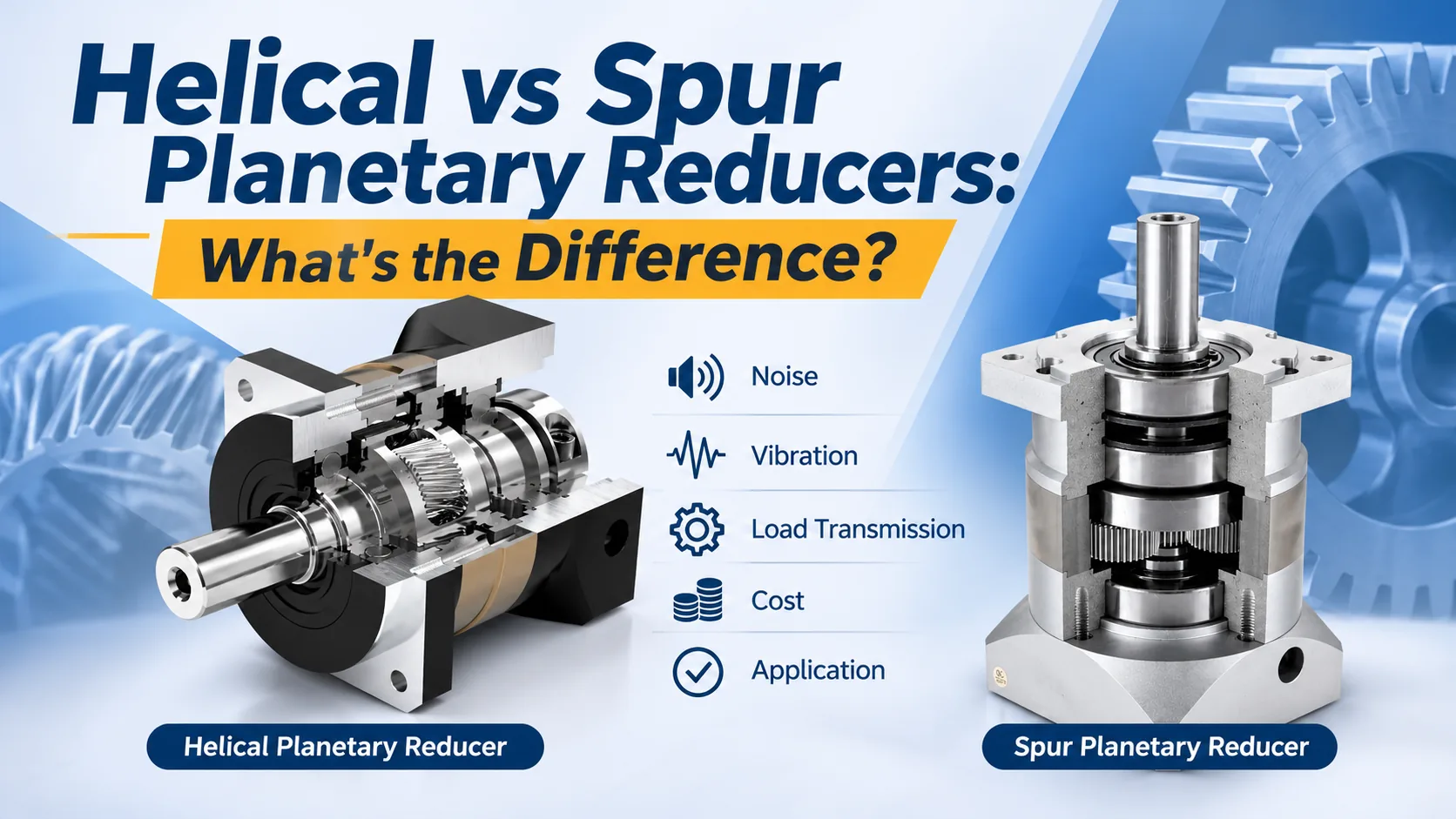
A planetary reducer increases output torque density, reduces motor speed to target wheel velocity, and provides high stiffness with minimal gear backlash.
Operational Results and Technical Limitations
Continuous multi-shift trial runs confirm the practical advantages of unified drive architectures. During continuous performance testing across simulated warehouse loops, the integrated motor drive system maintained positional accuracy within three millimeters. Power consumption readings taken directly from the digital bus allowed accurate battery sizing for full-shift operations. Operating temperatures remained well within thermal ratings under continuous duty, proving that unified drive components handle demanding operational workloads.
While integrated drives offer clear space and performance benefits, design teams must account for specific trade-offs. The high level of integration means that an internal drive or encoder fault usually requires replacing the complete module rather than a single board. Additionally, because drive electronics rely on the aluminum motor casing for heat dissipation, engineers must evaluate ambient operating temperatures and ensure adequate continuous airflow around the drive housing.