Modern factory automation requires reliable motion control. Choosing an incorrect speed reducer can damage your machinery. It raises operational costs and lowers manufacturing throughput.
Engineers must balance performance and project budget. The choice comes down to matching your specific application needs. You do not need to buy the most expensive gear design. You just need the right mechanical match. Proper speed reducer selection depends on torque, precision, and application limits.
At Houzai, we offer premium Zhuolan transmission solutions worldwide. Our team provides cost-effective industrial gearboxes and AGV components. This guide helps you choose the perfect model for your system.
The Core Difference: Worm vs. Planetary
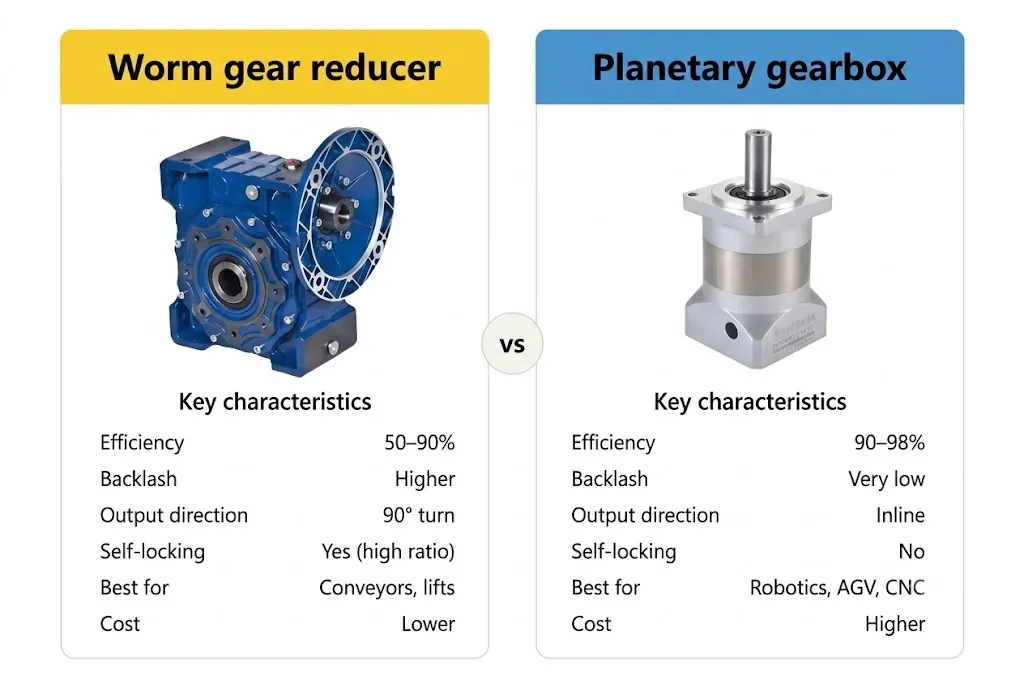
Worm gear units and planetary gearboxes have distinct mechanical designs.
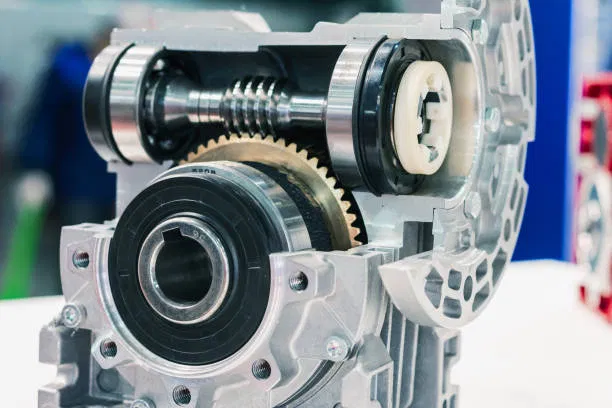
Worm systems use a screw mesh with a gear. This setup provides smooth operation and natural self-locking capabilities. However, sliding friction lowers their thermal efficiency.
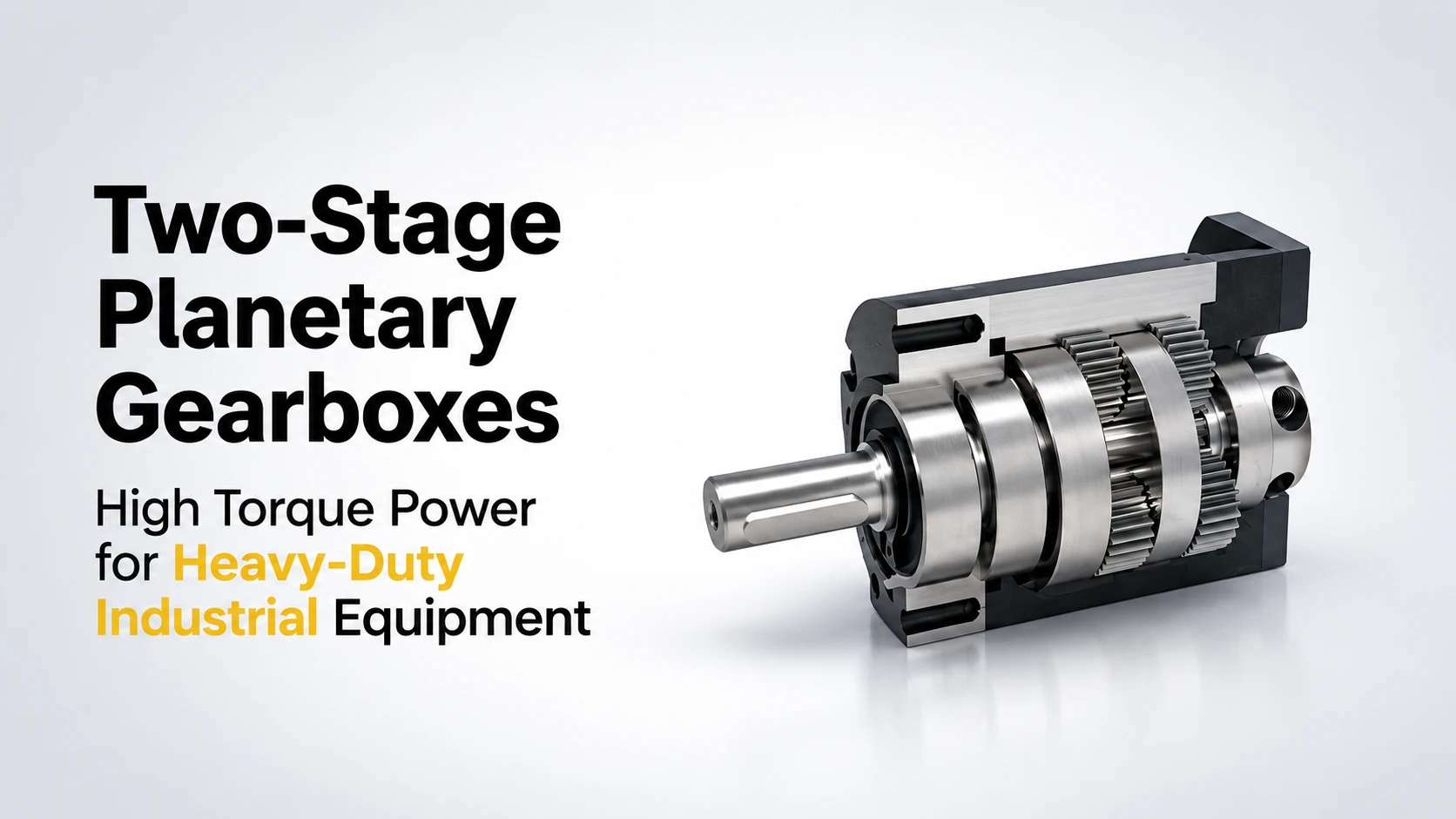
Planetary systems use multiple gears to distribute torque evenly. They offer high efficiency, rigid accuracy, and immense torque density. The trade-off is a higher initial manufacturing cost.
| Feature | Worm Gear Reducer | Planetary Gearbox |
| Transmission Efficiency | Low to Medium (50% to 80%) | Very High (90% to 98%) |
| Backlash / Precision | Standard (Noisy for indexing) | High Precision (Under 3 arcmin) |
| Load Capacity | Light to Medium | Heavy Duty / High Shock |
| Self-Locking Feature | Yes (At high ratios) | No (Requires external brake) |
| Cost Profile | Highly Economic | Premium Investment |
Matching Gearboxes to Your Application Scenarios
Industrial environments demand tailored solutions. Match your specific workplace needs directly to the ideal machinery archetype.
Low Cost and Self-Locking Needs
If your system requires low-speed operation without precision, choose a worm drive. They excel in small valves, light conveyor belts, and simple mixing machines. Select a ratio between 10 to 1 and 80 to 1. Ensure the housing meets IP54 standards to block dust.
Precision Positioning and Servo Systems
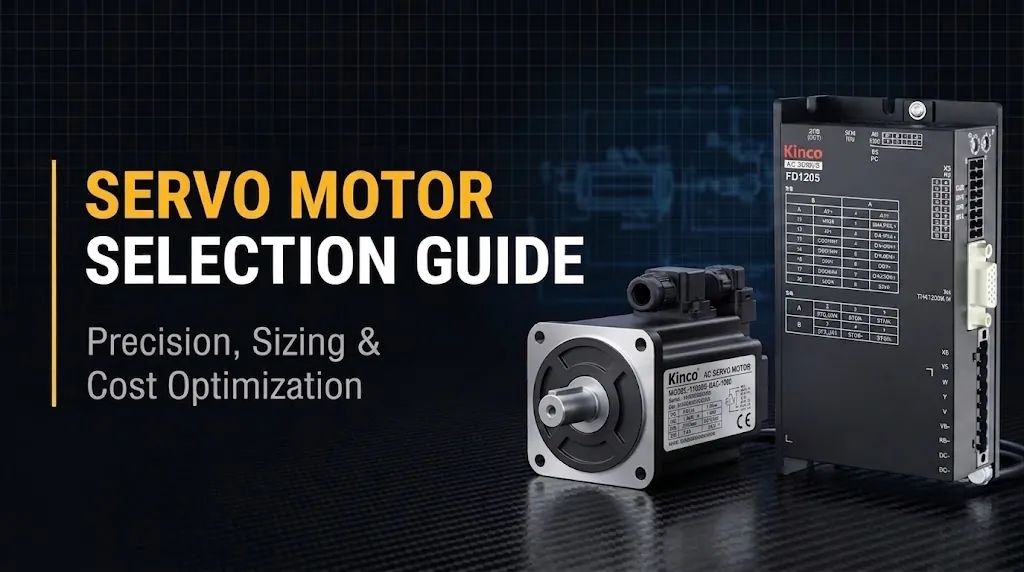
Modern robotic arms and electronic assembly lines need extreme accuracy. A planetary reducer is the only choice here. Pair it with high-grade servo motors. Look for a backlash rating under 3 arcmin for ultra-precise tasks.
Heavy Loads and High Shock Impacts
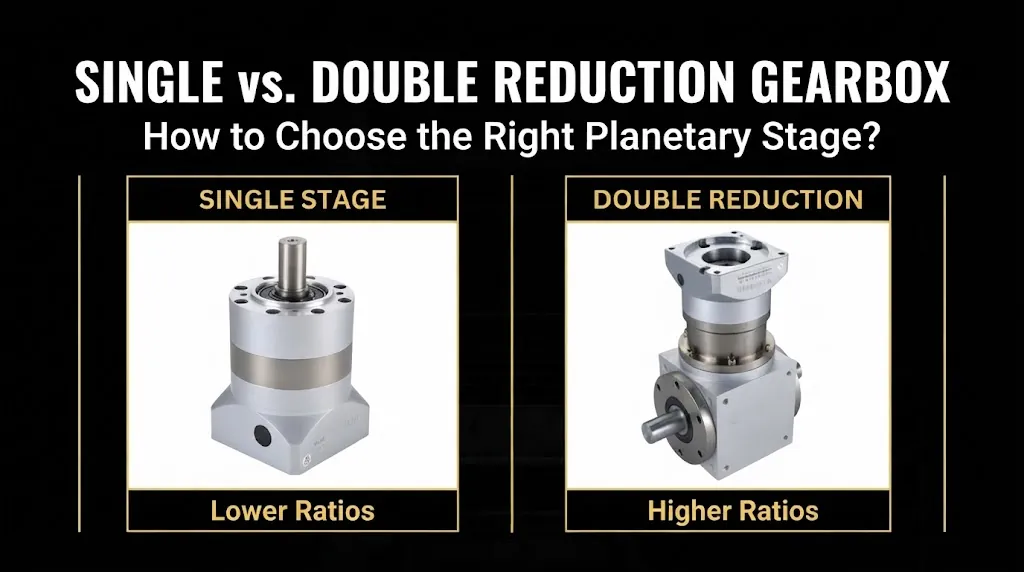
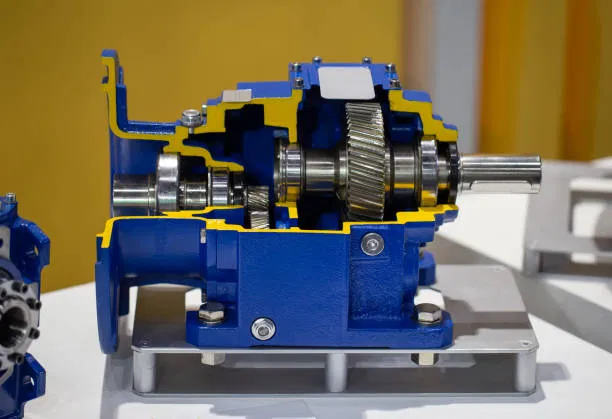
Crushers and heavy material lifters create massive mechanical stress. Planetary reducers handle these shocks perfectly. Choose a multi-stage model for large ratios. Ensure your safety factor is at least 1.3 to protect internal gear teeth.
Compact Spaces with Standard Loads
When space is limited but you do not need high precision, use a compact worm drive. These units fit into tight assembly corners easily. They save valuable floor space while keeping project budgets low.
Inclined Conveyors and Lifting Tables
Preventing a load from slipping backwards is a critical safety rule. Worm drives provide natural self-locking safety. For massive loads over 100 Newton-meters, switch to a planetary unit equipped with an electric brake.
A 3-Step Selection Framework for Engineers
Follow this simple checklist to find the ideal speed reducer for your project.
Step 1: Define Your Core Metrics
Calculate your required output speed and motor power. Determine your exact output torque. Always add a safety factor of 1.2 to 1.5 to your calculations. Note down your space limits and target budget.
Step 2: Screen by Feature Priority
Filter your choices based on your primary mechanical goal. If you need low costs and self-locking, pick a worm system. If you need efficiency, precision, and low noise, pick a planetary system.
Step 3: Verify Dimensions and Ratios
Calculate the exact gear ratio by dividing the motor speed by the output speed. Double-check the manufacturer catalog. Verify that the mounting flanges match your stepper or servo motors perfectly.
Common Selection Pitfalls to Avoid
Avoid these five frequent engineering mistakes to keep your production line running smoothly.
Chasing excess precision: Buying a planetary unit for a basic conveyor belt doubles your cost without adding value.
Forgetting the self-locking limits: Using a standard planetary unit on a hoist without a brake causes dangerous load slips.
Overloading worm systems: Putting worm drives in heavy shock environments causes rapid wear and gear failure.
Ignoring energy efficiency: Running low-efficiency worm drives continuously raises electric bills and generates extreme heat.
Misjudging spatial boundaries: Buying large planetary systems for tight machine enclosures leads to installation failures.
Limitations of Each System
No gearbox is perfect for every single scenario. According to global mechanical standards, worm drives experience higher friction. This wear means you must replace the bronze worm wheels periodically.
Planetary units have complex internal designs. They require specialized maintenance and a higher upfront investment. Balancing these limitations ensures long-term operational success.
Industrial Gearbox Selection FAQ
Can a planetary gearbox replace a worm gear reducer entirely?
No, it cannot replace it entirely. Planetary gearboxes lack natural self-locking features. They are also less cost-effective for simple, low-speed automation tasks.
Why do worm gear reducers heat up during continuous operation?
They heat up because their design relies on sliding friction between the screw and the gear. This action converts some kinetic energy into thermal energy.
How do I maintain a planetary gearbox for a cleanroom?
Choose a model with synthetic grease lubrication. Ensure it has an IP55 or higher protection rating to prevent oil leaks and contamination.