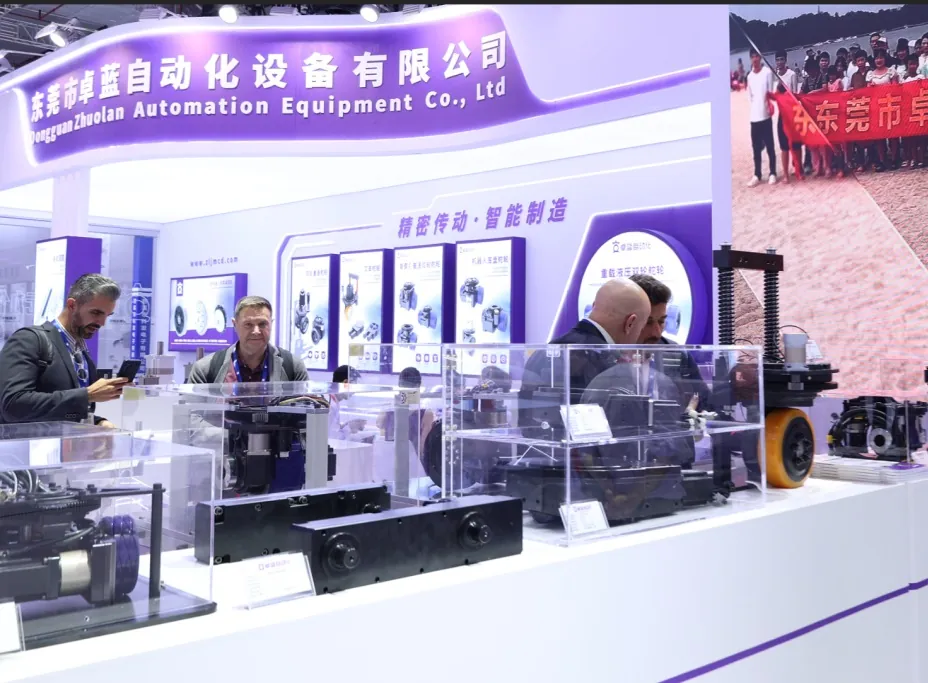
Heavy-duty AGVs handle much larger loads than many standard AGVs. Some applications need to move several tons or more.
That higher load changes the demands on the drive system. The wheel must carry the load, transfer motor torque, maintain traction, and stay in stable contact with the floor.
A heavy-duty AGV drive wheel is not just a rolling part. Wheel structure, material, suspension, and control all affect how the vehicle moves.
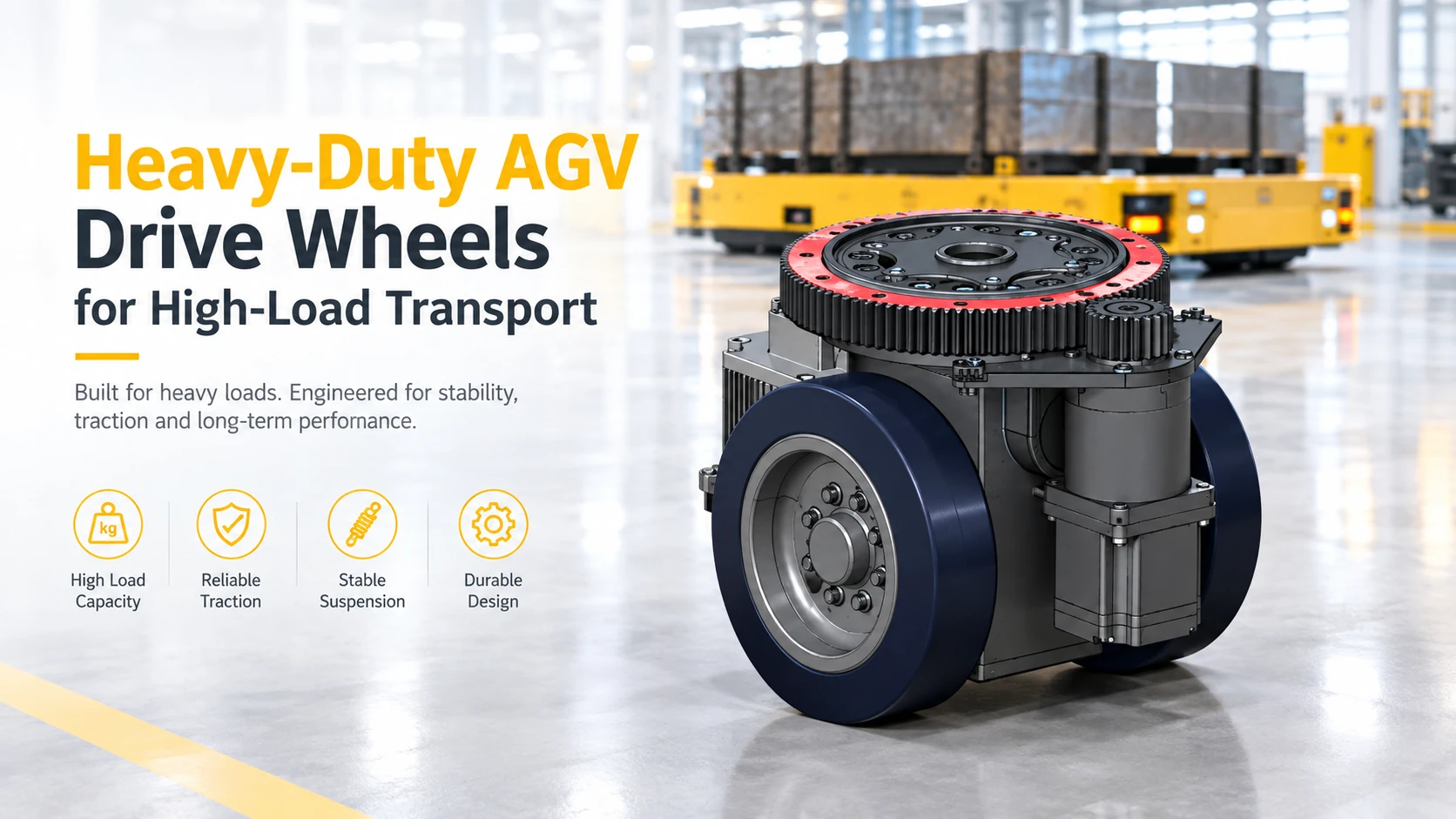
How Heavy-Duty AGV Drive Wheels Support High Loads
High loads place more stress on the wheel and its supporting structure. A suitable design spreads the load and keeps the wheel stable under repeated movement.
High-Strength Wheel Core
The wheel core carries much of the mechanical load. Heavy-duty designs can use high-strength metal cores and reinforced structures.
A stronger hub can help resist deformation under high loads. Reinforced sections can also support repeated loading during travel, acceleration, and braking.
Multi-wheel drive systems can share the vehicle load across several wheel assemblies. This can reduce the load carried by each wheel.
The wheel should match the AGV frame, motor, gearbox, and rated load. A drive wheel should not be selected as an isolated part.
Polyurethane Tread
Polyurethane is widely used for heavy-duty AGV wheels. It can balance load support, wear resistance, traction, and shock absorption.
Different hardness levels can suit different applications. A harder tread can support high loads, while a suitable contact layer can help maintain floor grip.
Polyurethane can also reduce vibration and operating noise. This can help protect both the vehicle and its payload.
For polyurethane wheels in heavy-duty AGV applications, material choice should match the load and working environment.
Oil, chemicals, temperature, and floor conditions can all affect wheel performance.
Distributed Load Support
Large AGVs may use several drive wheel assemblies. These wheels work together to support the vehicle and payload.
Distributed load support can reduce local pressure on individual wheels. Some systems can also use pressure sensors and hydraulic adjustment.
These systems can monitor wheel loading and help balance the load. This can be useful for vehicles with very large payloads.
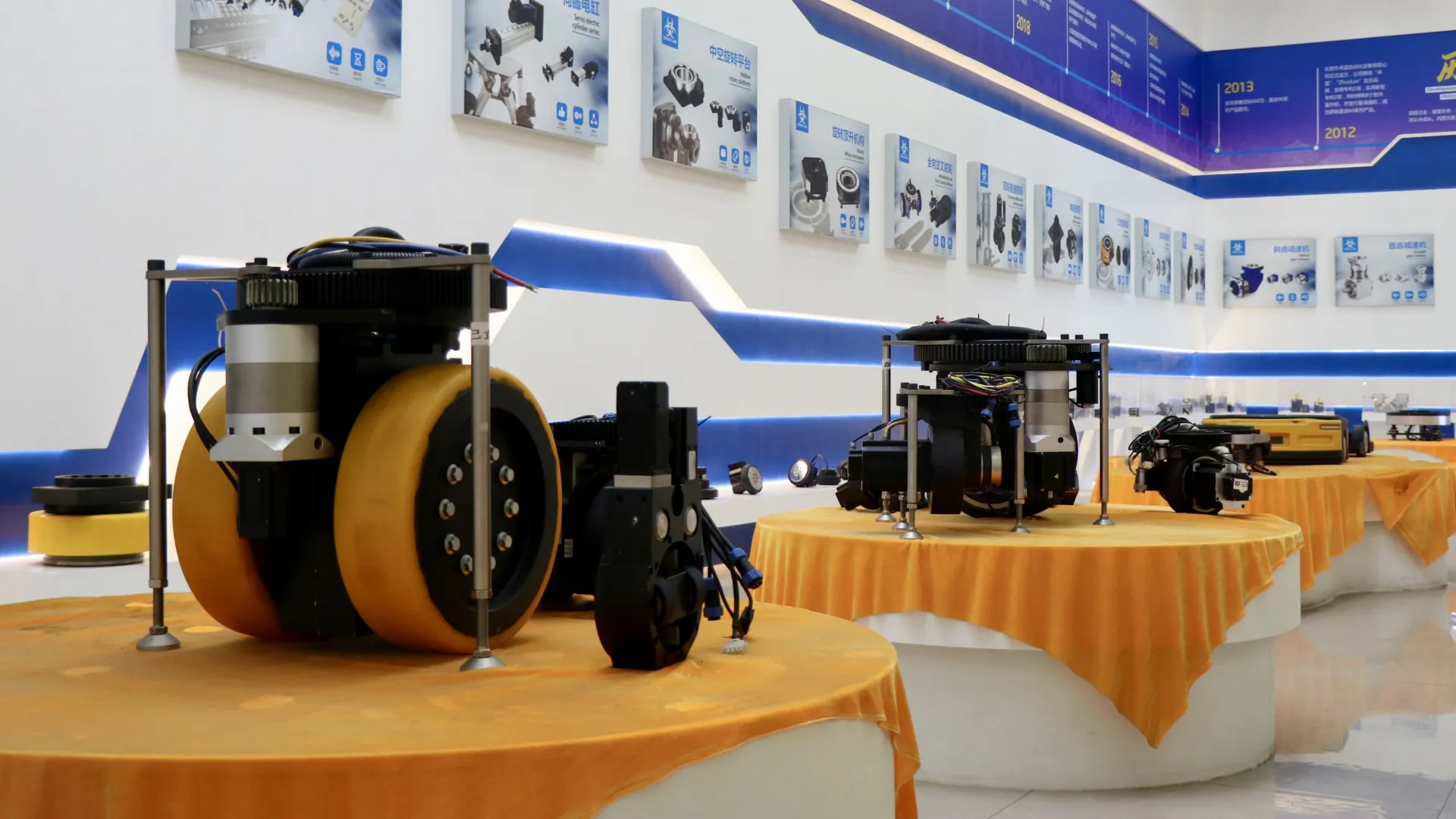
How Suspension Improves Heavy-Duty AGV Stability
Load capacity alone does not ensure stable movement. The wheels must also keep contact with the floor as the AGV moves.
Material-Level Shock Absorption
The wheel material can absorb small impacts from floor joints and surface changes.
Polyurethane provides elastic damping between the wheel and floor. This can reduce vibration transferred to the vehicle and payload.
Air Suspension
Air suspension can adjust wheel contact force and vehicle height.
It can help maintain wheel contact when floor conditions change. It can also help reduce uneven loading between wheel assemblies.
Floating Suspension
A floating drive wheel can move vertically as floor height changes.
Spring and linkage systems allow the wheel to follow uneven surfaces. This helps maintain contact and traction during travel.
A hinged suspension can also allow the wheel to follow floor changes. The final design depends on the vehicle structure and application.
Active Stability Control
Some heavy-duty AGV systems use sensors to monitor wheel pressure, wheel speed, or vehicle movement.
The control system can adjust motor torque or braking when conditions change. Anti-slip control can also respond to wheel speed differences or motor current.
Mechanical suspension and electronic control can work together. Both should be considered during the full drive system design.
How Heavy-Duty AGV Wheels Maintain Traction
High load does not automatically provide good traction. The wheel must transfer motor torque to the floor without excessive slip.
Tread Design
Tread design affects how the wheel transfers driving force.
Different tread and roller arrangements can support different movement patterns. These may include forward travel, turning, lateral movement, or diagonal movement.
The right tread design depends on the AGV drive layout and floor condition.
Anti-Slip Control
Wheel slip can occur when driving force exceeds available floor grip.
Sensors can monitor wheel speed and motor current. The control system can then adjust torque distribution or braking.
This can help maintain stable movement when floor friction changes.
Surface Treatment
Wheel surfaces can use different textures or materials to improve grip and wear resistance.
Surface treatment should match the floor, load, speed, and working environment.
A smooth industrial floor may need strong traction. A rough floor may need a more elastic and tear-resistant wheel material.
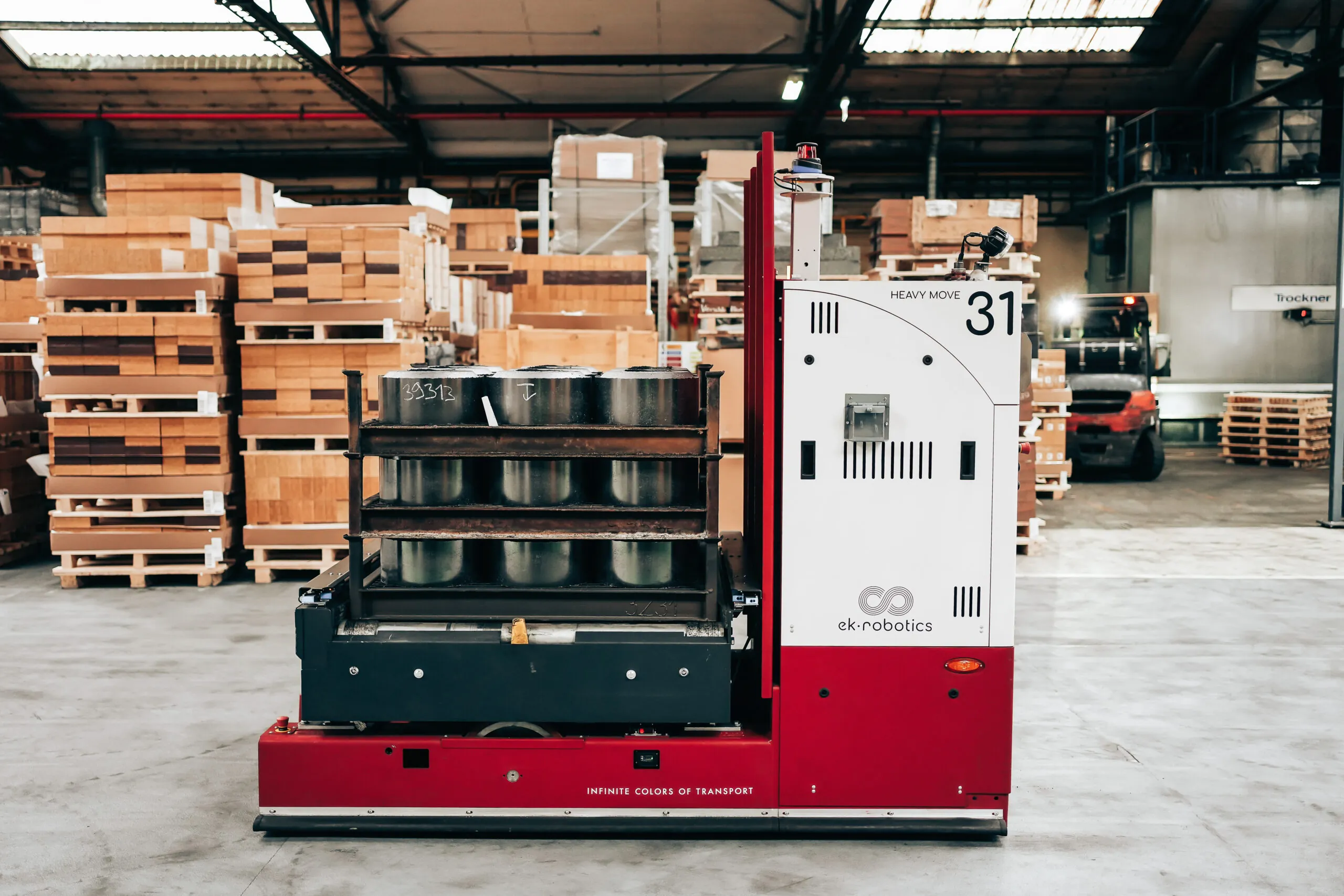
Heavy-Duty AGV Wheel Applications
Heavy-duty AGV wheels are used where large loads must move repeatedly and under controlled conditions.
Automotive Manufacturing
Heavy-duty AGVs can transport engines, assemblies, tooling, and other large components.
Stable drive wheels support repeated transport cycles. Suspension and traction also help maintain controlled movement.
Steel Handling
Steel plants may use heavy-duty AGVs to move large and heavy loads.
Wheel material, suspension, and protection should match the working environment. High loads and demanding floor conditions can place extra stress on the drive system.
Ports and Heavy Logistics
Heavy-duty AGVs can move or tow large loads in ports and logistics areas.
These applications need stable load support and reliable traction. Wheel selection should also consider repeated travel and floor conditions.
Aircraft and Large Equipment Handling
Heavy-duty AGV systems can support aircraft ground equipment and other large industrial equipment.
Precise movement and stable load support are important when the vehicle handles large or valuable equipment.
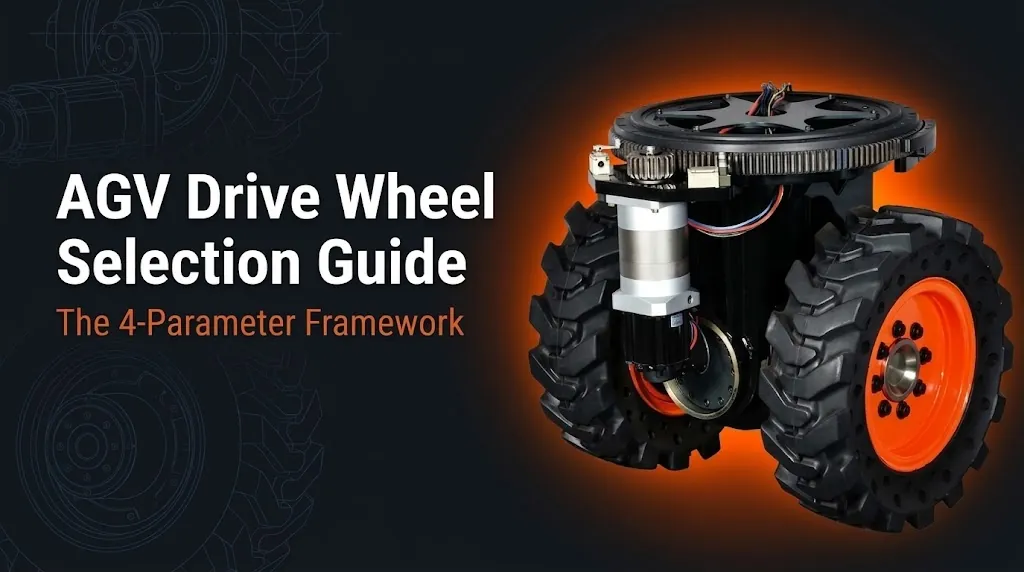
How to Select Heavy-Duty AGV Drive Wheels
Choosing a drive wheel requires more than checking its rated load. The wheel should match the full vehicle and the working environment.
1. Load and Speed
Start with the maximum AGV load and operating speed.
Consider both vehicle weight and payload. Wheel size, width, hardness, and drive torque should match the working load.
Acceleration and braking should also be considered. They can change the forces acting on the drive system.
2. Wheel Diameter and Width
Wheel dimensions affect load support and floor contact.
A larger or wider wheel may suit some high-load applications. The final choice should match the vehicle structure and installation space.
Motor and gearbox specifications should also be checked at this stage.
3. Floor Condition
Check the actual floor before selecting the wheel.
Common surfaces include epoxy, tile, concrete, and asphalt. Smooth floors may need strong traction.
Rough surfaces may need elastic and tear-resistant wheel materials. Uneven floors may also need suitable suspension.
4. Operating Environment
Consider oil, water, chemicals, heat, and low temperatures.
These conditions can affect wheel material and service life. The wheel compound and surface design should match the application.
Some applications may also require special properties such as anti-static performance.
5. Braking and Safety
Check wheel and brake compatibility during system design.
Consider braking distance, traction, emergency stops, and load stability.
The wheel should work with the motor, gearbox, brake, and control system.
6. Maintenance
Maintenance should also be considered during wheel selection.
Check how easily the wheel can be inspected and replaced. Modular wheel structures can simplify replacement.
Wear-resistant bearings and accessible components can also help reduce maintenance work.
Frequently Asked Questions
What is a heavy duty AGV drive wheel?
A heavy duty AGV drive wheel is a wheel assembly designed for AGVs that carry or tow high loads.
It combines load support and traction with the vehicle drive system.
Why are polyurethane wheels used on heavy-duty AGVs?
Polyurethane can provide a balance of wear resistance, load support, traction, and shock absorption.
Different hardness levels can also suit different floor and load conditions.
How do I choose a heavy-duty AGV drive wheel?
Start with the AGV load and operating speed.
Then check wheel size, floor condition, working environment, braking, safety, and maintenance needs.
Can heavy-duty AGV wheels work on uneven floors?
They can when the wheel and suspension system match the floor condition.
Floating suspension or air suspension can help maintain wheel contact on uneven surfaces.
What industries use heavy-duty AGV wheels?
Common applications include automotive manufacturing, steel handling, ports, heavy logistics, aircraft equipment, and other large-load transport tasks.
What is the most important factor in AGV wheel selection?
There is no single factor for every application.
Load, speed, floor condition, environment, braking, suspension, and maintenance should be considered together.
A properly matched wheel system can support stable movement and reliable traction under demanding loads.