What is a Planetary Gear Reducer?
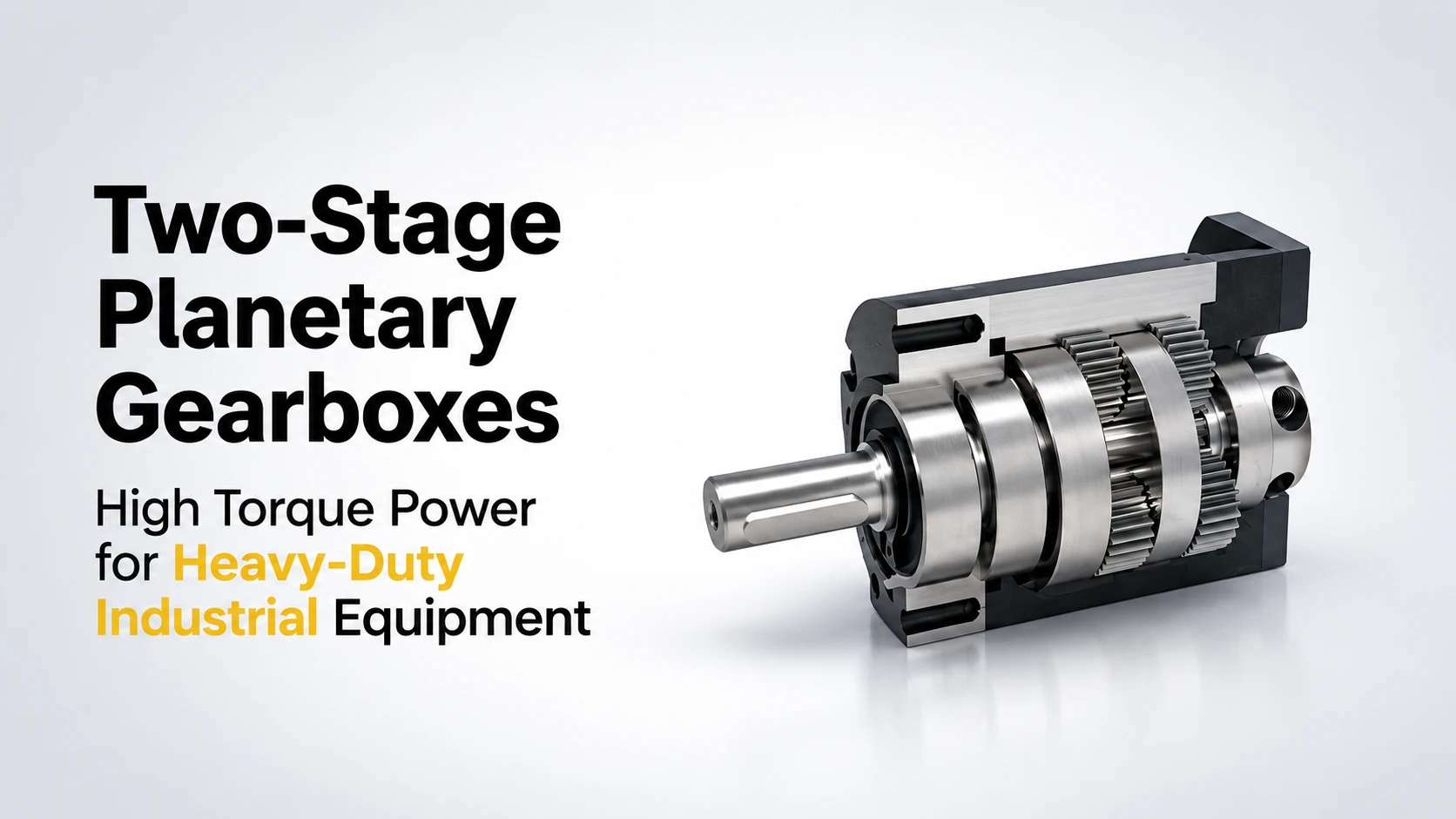
In the world of high-performance machinery, the planetary gear reducer is a critical component. It is an essential part of any efficient drive system. Its smart design allows it to deliver high torque and precision in a small package. At its heart, a planetary gearbox consists of several key parts working in perfect harmony. These include an output shaft, bearings, and a series of gears that give it its name and unique capabilities.
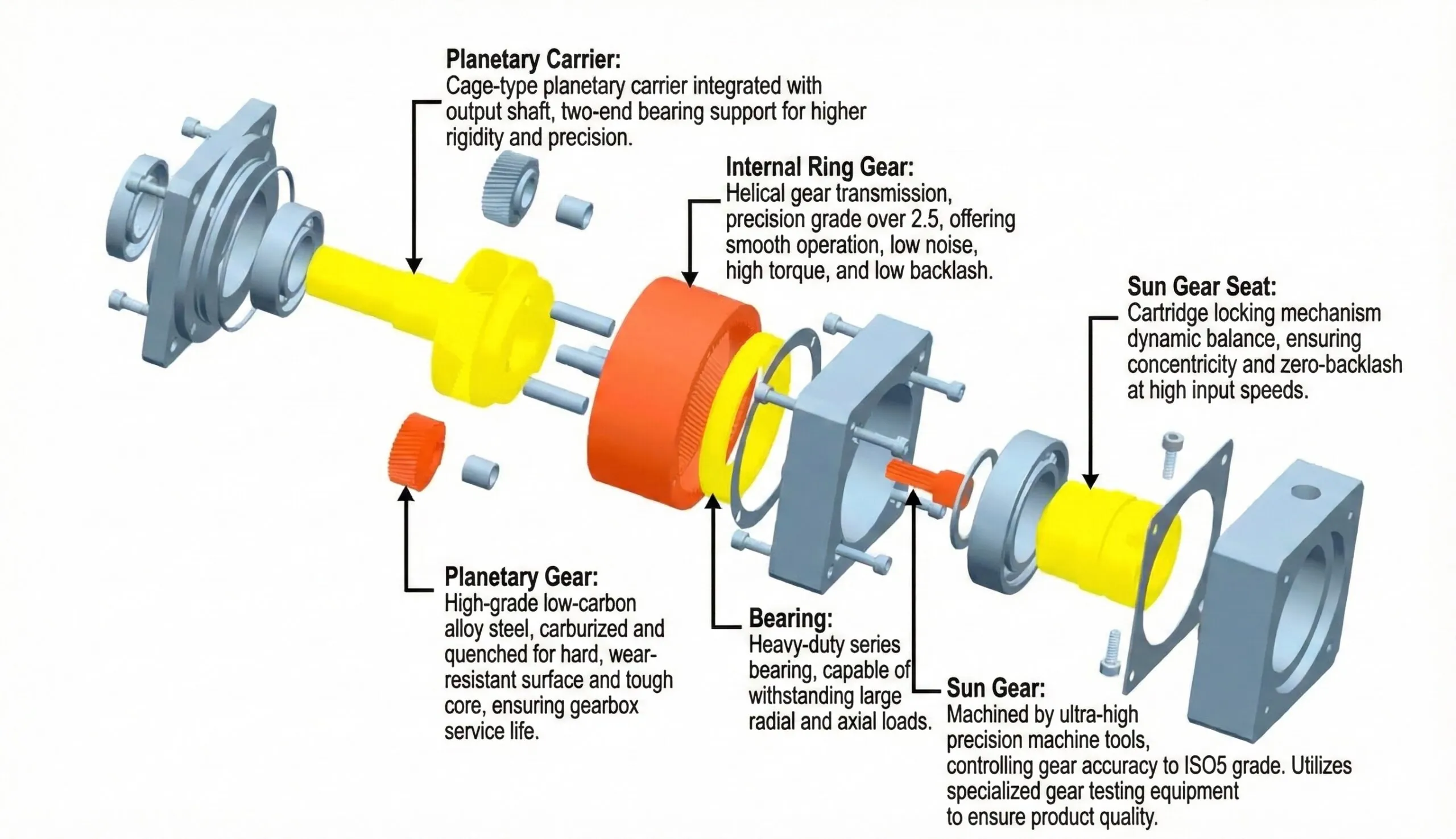
The core transmission structure of a planetary gearbox is one of the most efficient designs available. It is built around four main components that work together seamlessly.
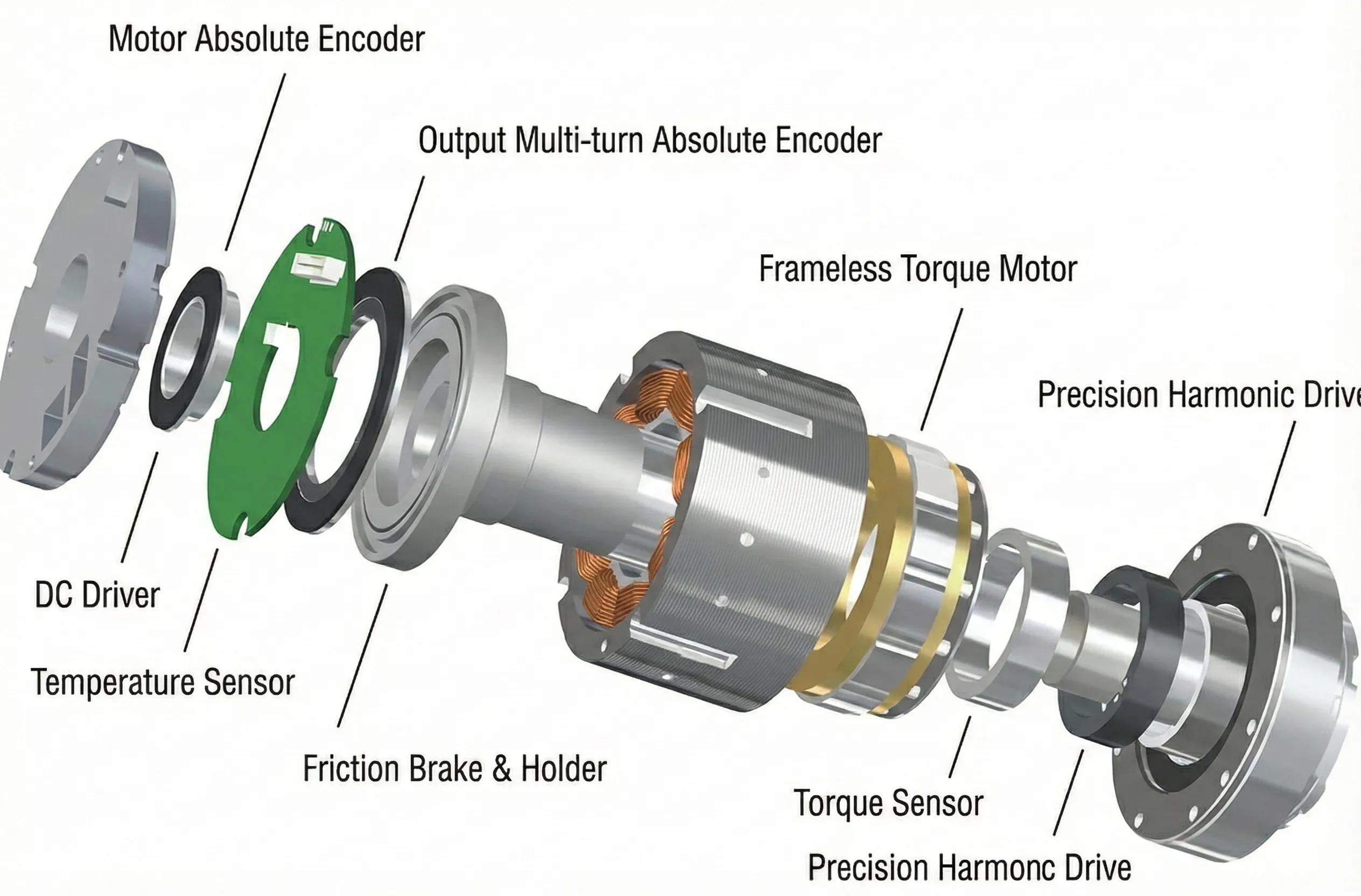
The Core Transmission Principle
To understand why this gearbox is so effective, we need to look at its four main parts. The interaction between them is what allows for powerful and precise speed reduction.
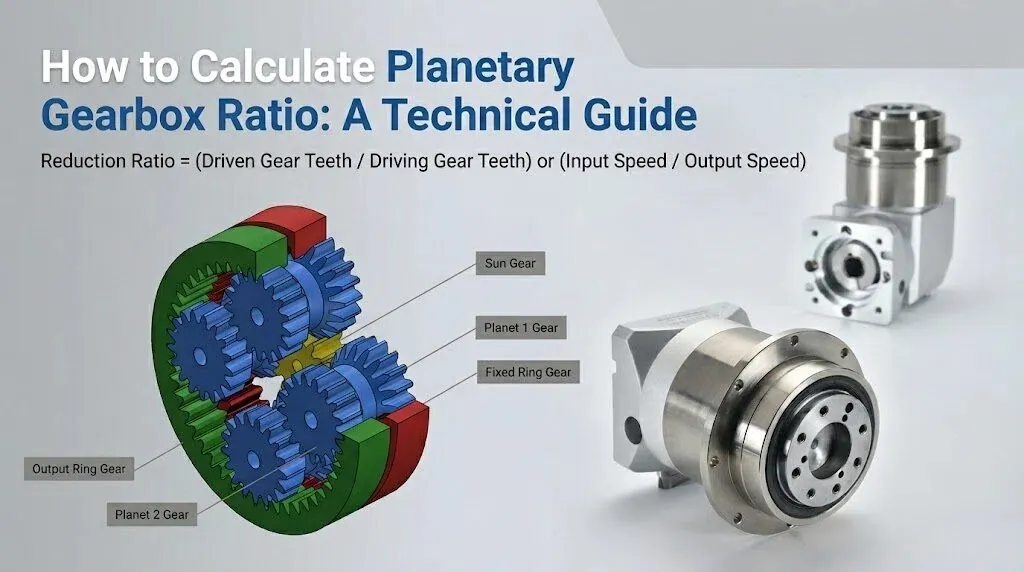
- The Sun Gear: Located at the center, this gear is connected directly to the input shaft of the motor. When the motor turns, the sun gear is the first to move, initiating the transmission process.
- The Planet Gears: These smaller gears are mounted on a movable carrier and mesh with the central sun gear. As the sun gear spins, it drives the planet gears, causing them to rotate.
- The Ring Gear: This is a stationary outer ring with internal teeth. The planet gears also mesh with this ring gear. As the planet gears are driven by the sun gear, they roll along the inside of the ring gear.
- The Planet Carrier: This component holds the planet gears together. As the planet gears orbit around the sun gear, they cause the carrier to rotate. This carrier is connected to the output shaft, delivering the final power and reduced speed.
This entire assembly works together to reduce speed and multiply torque. For even higher reduction ratios, multiple sets of these gears can be stacked together.
Product Series Overview
We provide a full lineup of precision planetary reducers tailored for diverse industrial needs. The PLF, PLE, and ZPLE series offer versatile in-line drive solutions with square or round flanges. For compact machinery requiring 90 degree output, the PLFK and PLEK right-angle series deliver optimal power density in tight layouts.
| Series | Transmission Type | Ratio Range | Rated Efficiency | Max Output Torque | Primary Target Applications |
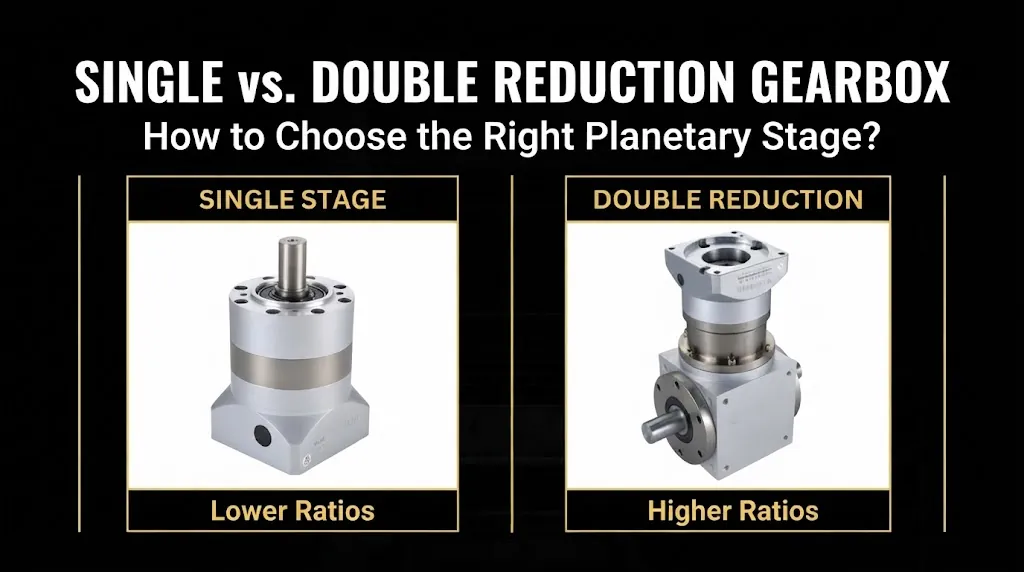
| PLF / PLE / ZPLE | In-Line Axial | 1-Stage: 3 to 10, 2-Stage: 12 to 100 | 97 percent (1-Stage), 95 percent (2-Stage) | 8.5 Nm to 900 Nm | Industrial automation, linear motion, and packaging lines |
| PLFK / PLEK | Right-Angle | 1-Stage: 3 to 10, 2-Stage: 12 to 100 | High Efficiency Bevel | 8.5 Nm to 900 Nm | Compact enclosures, AGV drives, and robotic arms |
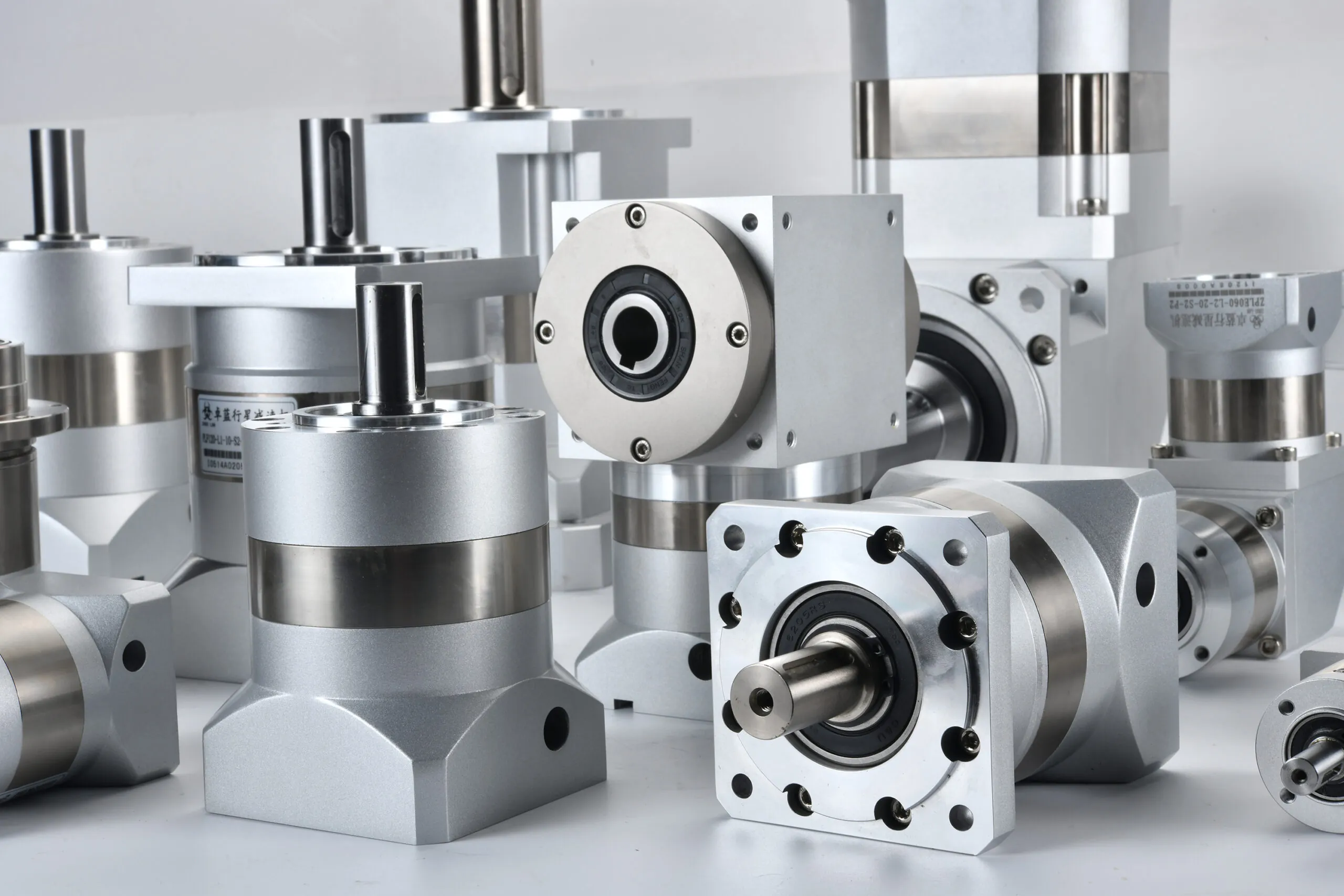
Key Specifications Comparison
All series build upon rigorous engineering standards to ensure high dynamic response and long service life under heavy load cycles.
Operational Limits Overview
Across standard frame sizes (060 to 160), our units feature standard IP65 protection and a rated service life of 20000 hours.
- Input Speeds: Nominal input speeds range from 2000 rpm (size 120-160) to 3000 rpm (size 060-090), with maximum input limits reaching up to 6000 rpm.
- Mechanical Force Resistance: Maximum radial load resistance ranges from 170 N on size 060 up to 3200 N on size 160. Maximum axial force capacity ranges from 120 N to 3000 N.
- Acoustic Performance: Low noise meshing keeps operational noise between 60 dB and 70 dB across all sizes.
Rated Torque Comparison (T2N in Nm)
The table below highlights representative output torques across key reduction ratios:
| Configuration | Ratio Example | Size 060 | Size 080 / 090 | Size 120 | Size 142 / 160 |
| 1-Stage (L1) | Ratio 3 | 16.5 Nm | 60 Nm | 148 Nm | 310 Nm |
| 1-Stage (L1) | Ratio 5 | 27 Nm | 94.5 Nm | 235 Nm | 420 Nm |
| 1-Stage (L1) | Ratio 10 | 8.5 Nm | 39.5 Nm | 93 Nm | None |
| 2-Stage (L2) | Ratio 12 to 28 | 30 Nm | 96 Nm | 250 Nm | 680 Nm |
| 2-Stage (L2) | Ratio 64 to 100 | 37.5 Nm | 120 Nm | 310 Nm | 900 Nm |
Key Advantages for Industrial Automation
Compared to traditional parallel-axis gear systems, the planetary design offers significant advantages. Traditional gears rely on a few contact points to transfer power, concentrating stress and leading to wear. A planetary gearbox, however, distributes the load across multiple gear contact points simultaneously. This balanced design makes it a superior choice for any demanding industrial automation gearbox application.
Compact Size, Powerful Performance
One of the most noticeable benefits is its small size and low weight. Traditional gearboxes often need multiple large gears to achieve high reduction ratios, requiring a large and heavy housing. Planetary gear reducers, however, can achieve high ratios in a single, compact stage. This design saves valuable space in machinery and reduces the overall weight of the system, which is crucial for applications like robotics and AGVs.
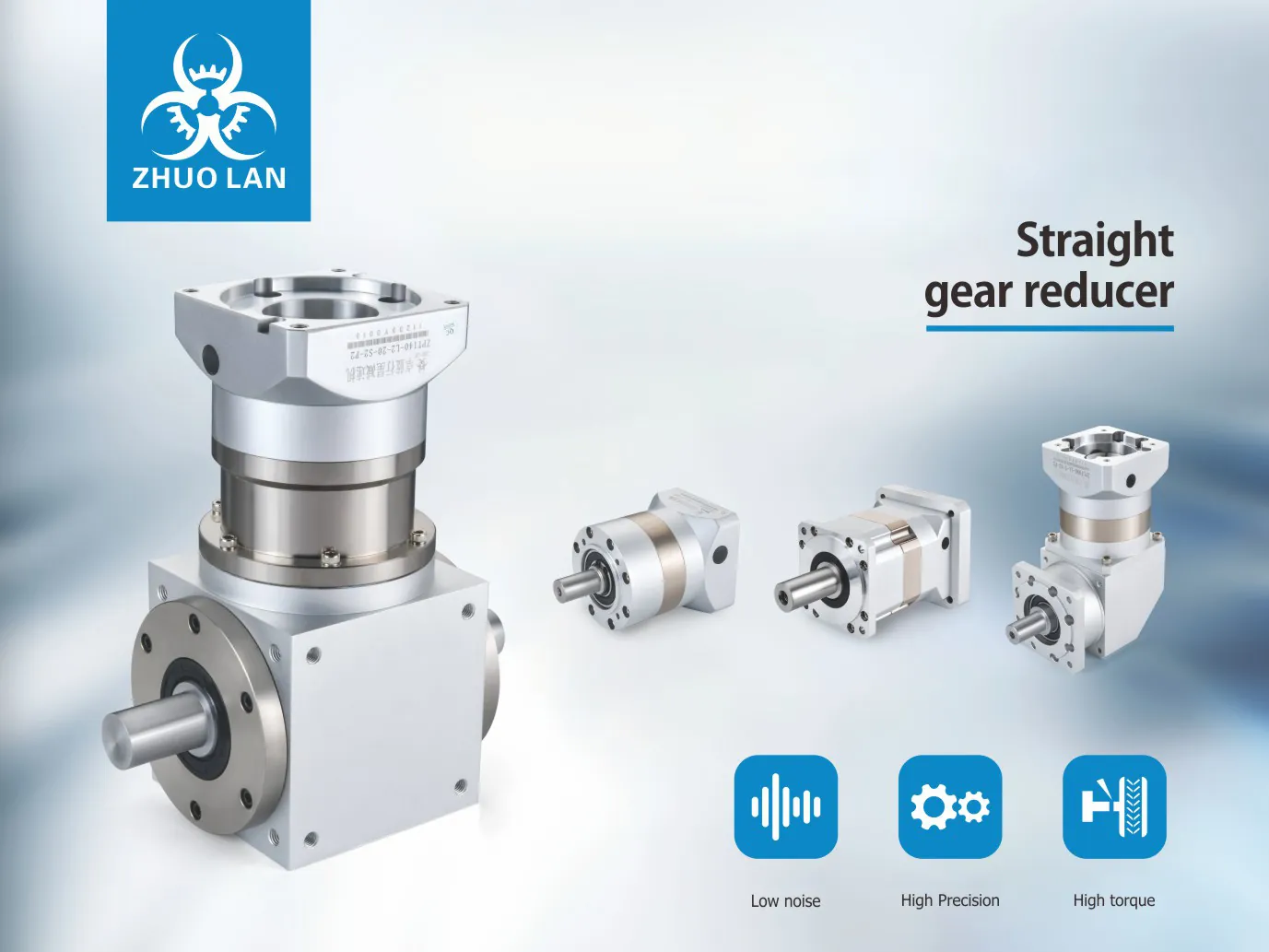
Unmatched Efficiency and High Precision
Efficiency is where the planetary gearbox truly shines. The tight meshing of the planet gears within the ring gear minimizes energy loss. This high-efficiency transmission means more power from the motor is delivered to the output. Furthermore, this design results in very low backlash (the amount of play between gears). This minimal backlash is essential for tasks requiring precise positioning and repeatability, making it the perfect high precision gearbox for the needs of growing manufacturing sector.
Superior Durability and Torque Capacity
Because the load is shared evenly across several planet gears, the system can handle much higher torque and shock loads than a traditional gearbox of the same size. This distribution of stress reduces wear and tear on individual gear teeth, leading to a longer operational life and greater reliability. The robust construction ensures that bearings and other components are protected from damage even under high-stress conditions.
Applications in Industrial Automation
Modern smart factories widely integrate planetary gear reducers into their systems.
- Compact right angle units power AGV drive wheels in tight warehouse aisles.
- High precision reducer models ensure smooth rotation for robotic arm joints.
- In line series units drive high speed indexing tables and automated packaging lines.

How to Select the Right Reducer
Selecting the proper gear reduction system requires evaluating your mechanical requirements step by step.
- Divide your motor rated speed by the target output speed to find gear ratio.
- Calculate your continuous running torque and match it against rated torque tables.
- Verify that radial and axial forces stay within maximum allowable thrust limits.
- Choose in line models for standard drives or right angle models for tight spaces.
A Step-by-Step Guide to Proper Installation
Correct installation is vital for the performance and longevity of your planetary gear reducer. A precise setup ensures that your machinery runs smoothly and avoids premature failure. Always follow these steps carefully when integrating a reducer into your servo, stepper, or DC motor systems.
1. Pre-Installation Checks
Before you begin, inspect both the motor and the gear reducer to ensure they are undamaged. Crucially, verify that all connecting dimensions match perfectly. This includes the motor’s mounting flange, input shaft, and the reducer’s corresponding groove.
2. Preparation
Clean any anti-rust oil from the motor’s input shaft, mounting flange, and the reducer’s connection points. Next, adjust the clamping ring on the reducer so that its side holes align with the dust-proof holes. Insert and tighten the hex screw. Finally, remove the key from the motor shaft.
3. Mounting the Gearbox to the Motor
Connect the motor and reducer gently. It is essential to ensure that the output shaft of the reducer and the input shaft of the motor are perfectly aligned (concentric). The mounting flanges on both sides must be parallel. If they are misaligned, you risk breaking the motor shaft or causing excessive wear on the reducer’s gears. Never use a hammer or force to connect the components, as this can damage bearings or gears.
4. Final Tightening and Checks
To ensure even pressure, first loosely thread in the mounting bolts at diagonal positions. Then, insert the other two bolts before tightening all four sequentially. Finally, tighten the clamping ring bolts. Use a torque wrench to tighten all bolts to the specified torque values to guarantee a secure and stable connection. The same principle of concentricity applies when connecting the reducer’s output shaft to your machinery.
Frequently Asked Questions
Why is a planetary gear reducer better for automation?
Its combination of high torque, precision, compact size, and durability makes it ideal for robotics, AGVs, and automated assembly lines where space is limited and accuracy is critical.
What is “backlash” and why is it important?
Backlash is the small gap or “play” between gear teeth. In applications like CNC machining or robotics, low backlash is essential for precise, repeatable movements. Planetary gearboxes are known for their very low backlash.
How do I choose the right planetary gearbox?
Choosing the right gearbox depends on your specific needs for torque, speed ratio, precision, and size. As a leading provider of cost-effective, high-quality solutions, our team can help you select the perfect planetary gear reducer for your application in Vietnam, India, Cambodia and other international markets.