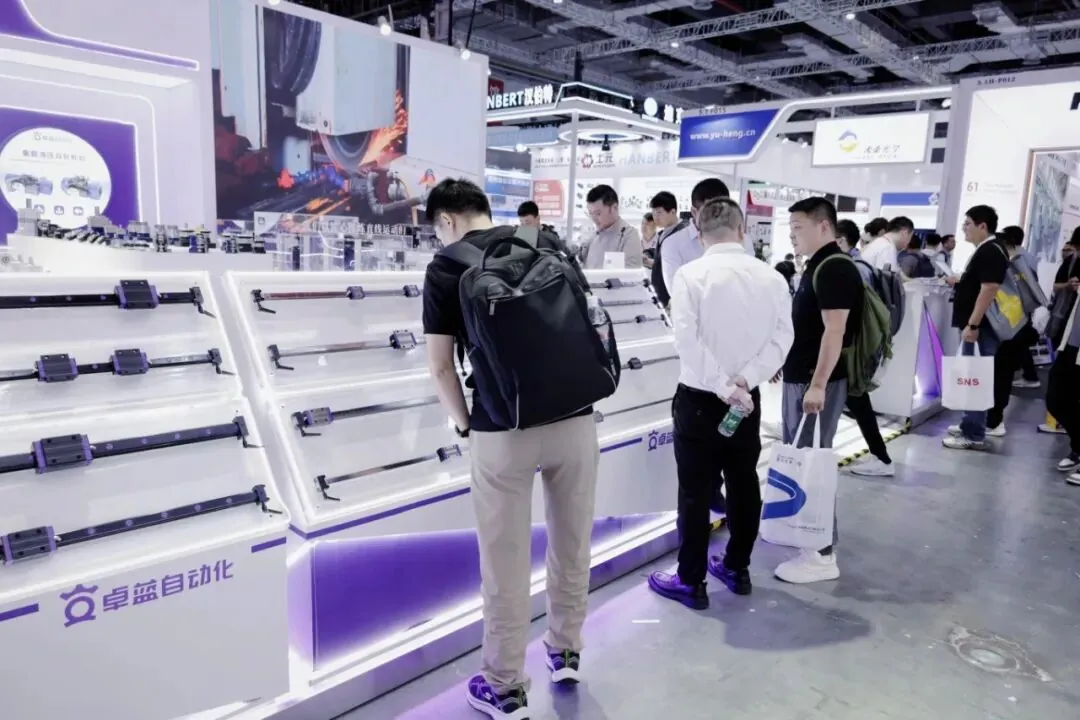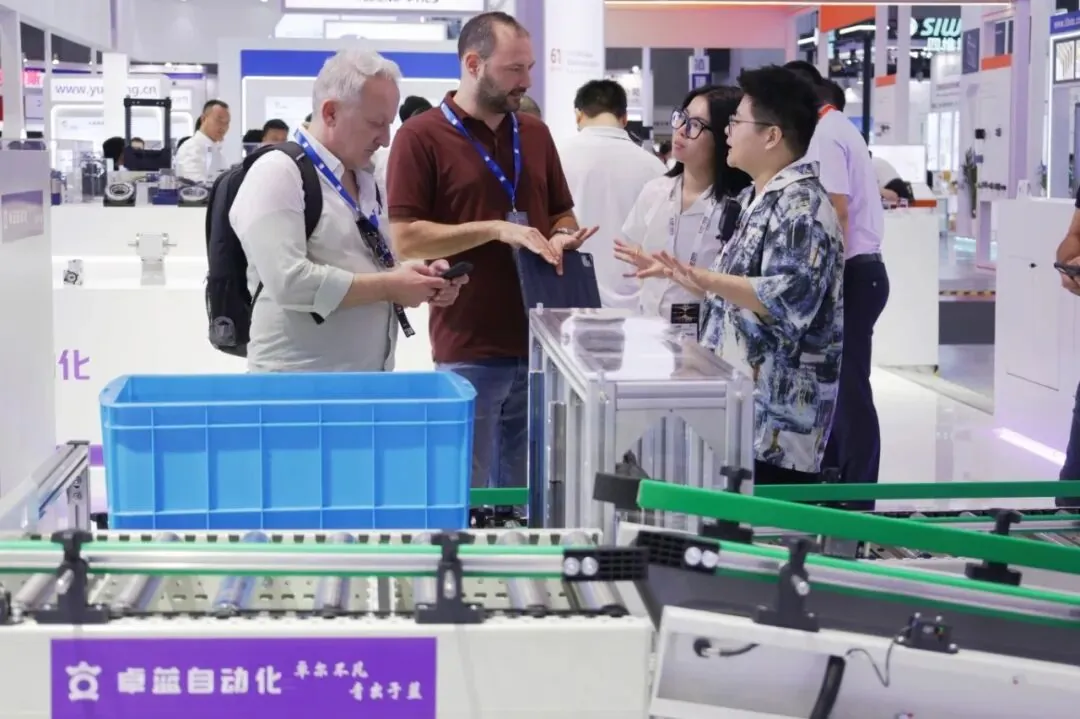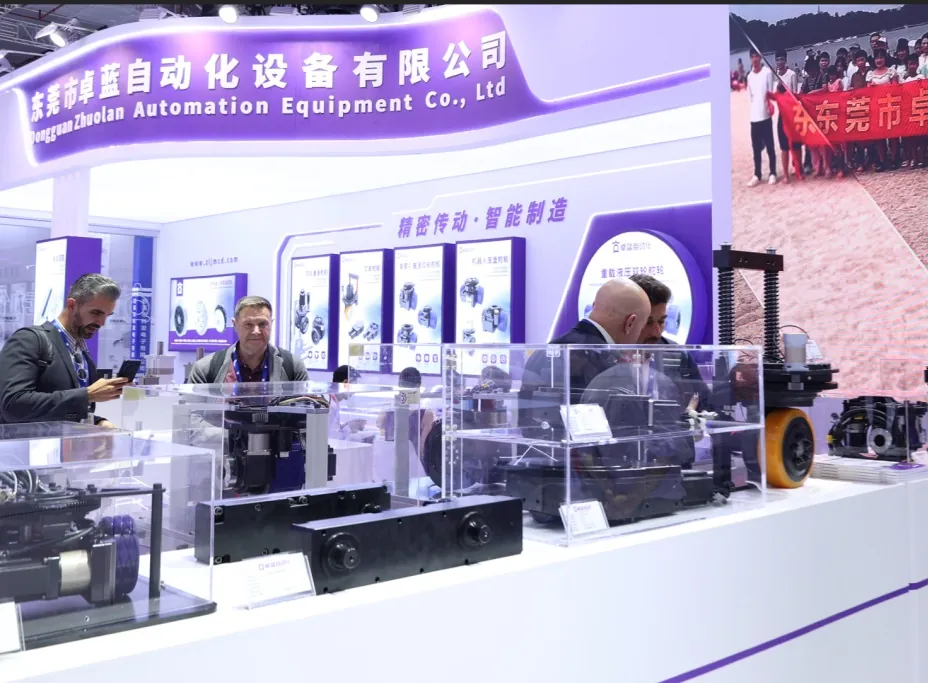
Selecting reliable drive wheels for automated guided vehicles directly impacts operational uptime. Mobile robots rely on polyurethane drive wheels to transmit driving torque, maintain road traction, and support dynamic loads during continuous production runs. Poor wheel choices often cause fast tread wear, unexpected operational noise, and sudden structural failure on factory floors. Engineering teams must evaluate key technical parameters and audit component suppliers to secure reliable motion hardware.
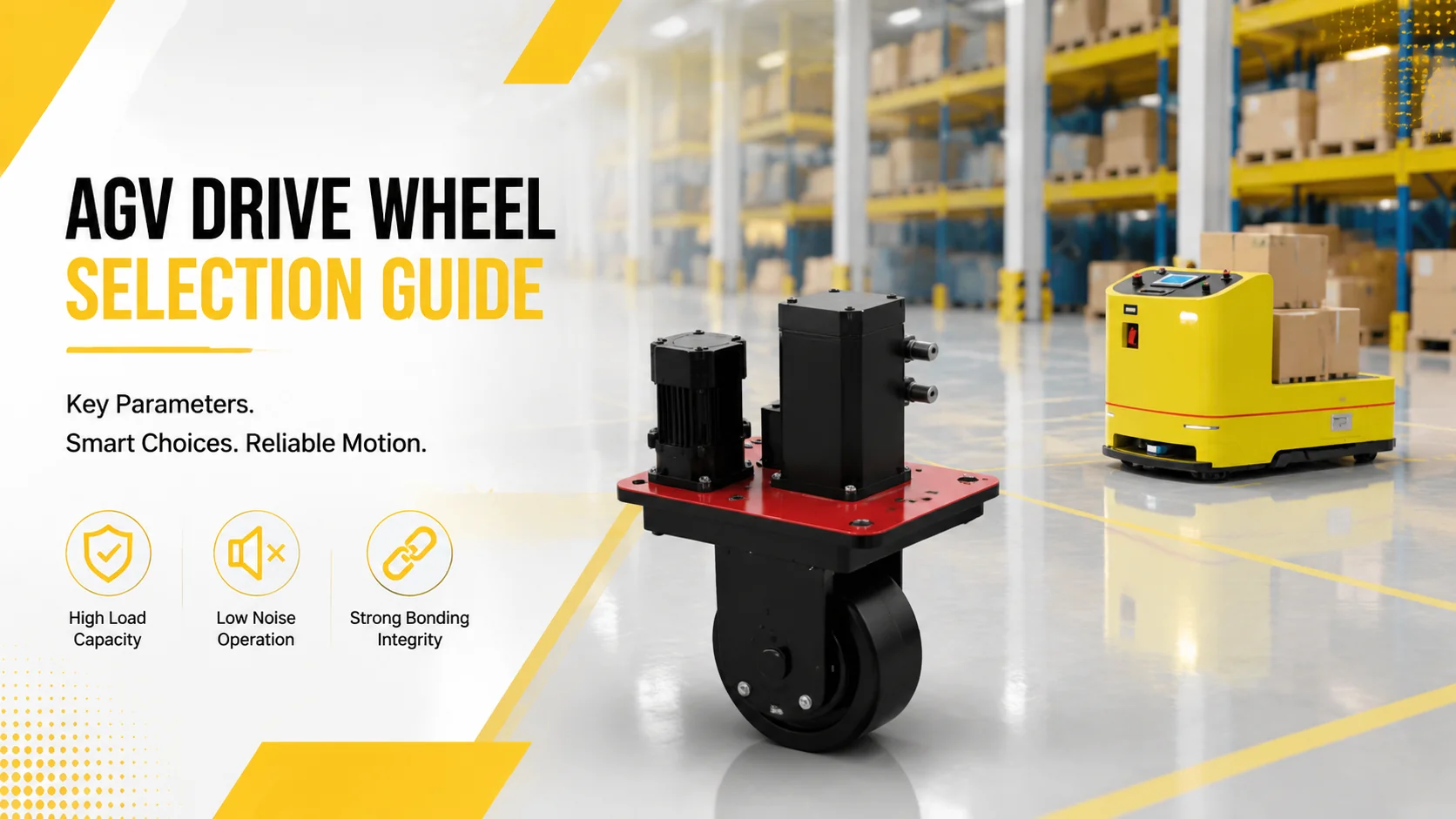
Why Drive Wheel Selection Dictates Robot Performance
Drive wheels serve as the primary contact point between mobile robot chassis and facility floors. Substandard wheel selection creates immediate operational bottlenecks in automated material handling systems.
Fast tread wear occurs when polyurethane hardness does not suit local floor conditions. Heavy vehicles operating continuously can wear down low-grade material compounds within several months. Excessive wheel wear increases routine maintenance costs and causes unexpected machine downtime.
High noise levels pose another common challenge in busy factory environments. Hard wheel compounds generate vibrations on concrete or epoxy surfaces. These noise levels can exceed comfortable working thresholds for operating personnel.
The most severe point of failure is tread debonding. In this scenario, the outer polyurethane layer separates completely from the internal metal hub. This structural breakdown halts vehicle movement immediately and risks payload damage during transport.
Core Technical Parameters to Evaluate
Engineers must analyze key physical properties during the technical evaluation of polyurethane drive wheels.
Load Capacity and Dynamic Safety Factors
Calculations must combine vehicle tare weight, maximum payload size, and wheel layout. Standard static equations fail to account for dynamic weight shifts during sudden stops and sharp turns. Engineering teams typically apply a dynamic safety factor between 1.3 and 1.8 to handle unexpected shock loads.
Polyurethane Hardness Selection
Matching polyurethane durometer to facility floors balances driving grip against rolling resistance. Softer wheels measuring 75A to 80A Shore hardness provide good traction and lower operational noise on smooth surfaces. Harder formulations measuring 90A to 95A Shore hardness support heavy payloads and lower rolling drag to save battery power during long shifts.
Bonding Integrity and Debonding Prevention
Adhesion quality between the metal hub and polyurethane layer dictates overall wheel life. Quality manufacturers prepare metal hubs using mechanical grooving and chemical vulcanizing primers. These combined processes establish molecular bonds that help prevent delamination under heavy dynamic forces.
Precision Tolerances for Drive Systems
Smooth mobile navigation requires reasonable manufacturing tolerances. High-precision drive wheels maintain low radial runout, often targeting values as low as 0.05 mm, to protect internal gearsets. Maintaining tight tolerances prevents vehicle wobble and reduces mechanical wear on driving motors.
Step-by-Step AGV Wheel Supplier Evaluation Framework
Following a structured supplier audit process helps procurement teams choose reliable component partners efficiently.
Step 1 Define System Requirements
Document total vehicle weight, operational speed, floor texture, ambient temperature, and chemical exposure before starting supplier conversations.
Step 2 Assess Engineering Capabilities
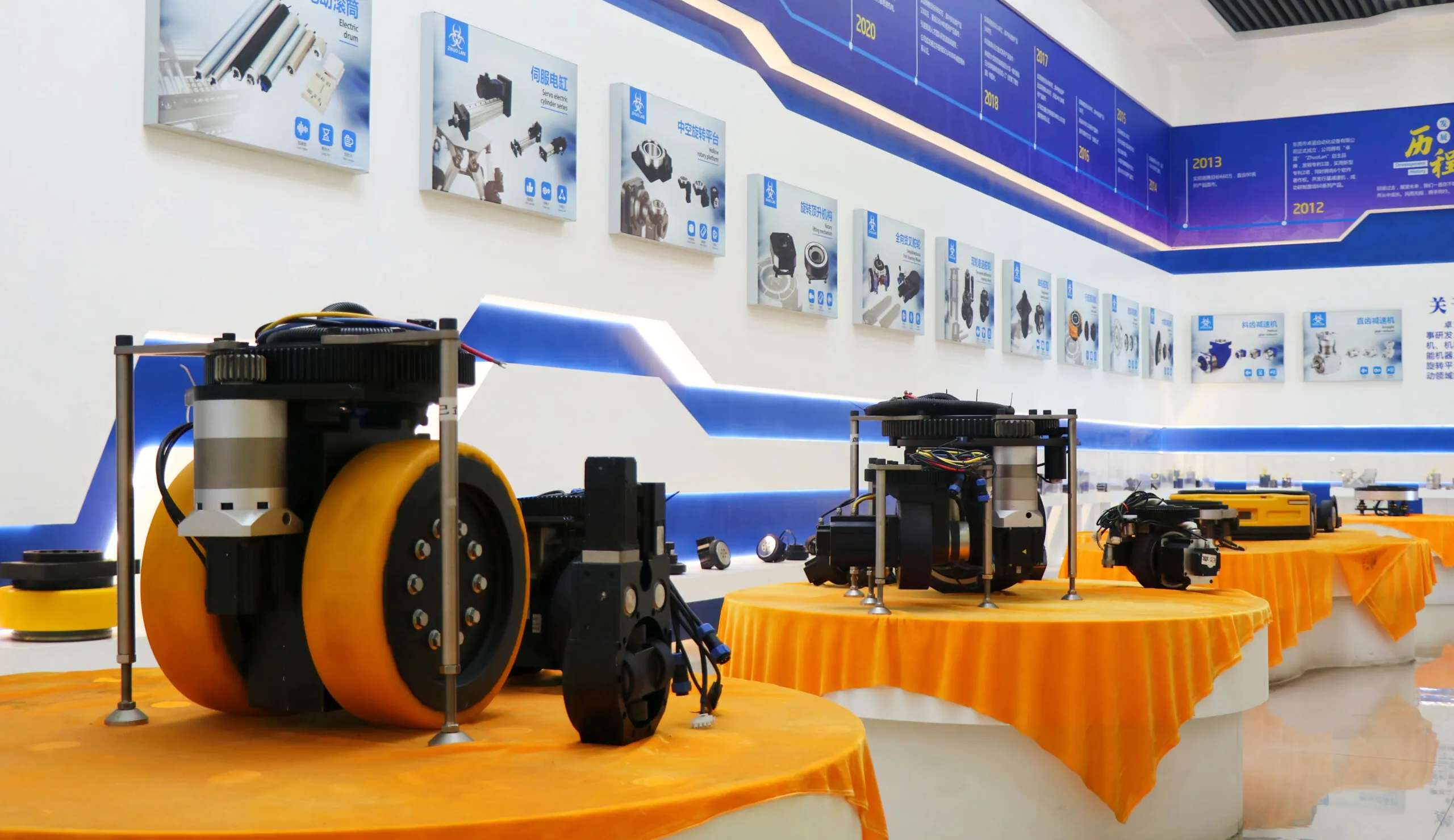
Review supplier technical patents, engineering credentials, and quality management standards. Prioritize partners that offer integrated motion kits (motors, reducers, and wheels) and flexible custom engineering support to ensure smooth technical alignment during prototype development.
Step 3 Review Laboratory Test Documentation
Request lot-specific inspection reports covering durometer measurements, dimensional coordinate checks, and tensile debonding test results.
Step 4 Conduct Audits and Pilot Testing
Visit manufacturing facilities to check polyurethane casting equipment, precision lathes, and quality inspection labs. Order a small pilot lot to evaluate real-world wear performance before approving volume orders.
One-Stop Motion Solutions from Houzai and Zhuolan
Balancing high mechanical performance with cost efficiency is essential for growing manufacturing facilities across expanding automation markets. Houzai serves as the primary global trading and engineering service partner for Zhuolan, a premier manufacturer specializing in precision planetary reducers and mobile robot drive components.
Through this technical partnership, Houzai provides machinery builders with high-grade drive wheels, planetary reducers, servo motors, stepper motors, and motorized rollers. Delivering factory-tested motion assemblies gives integrators access to high-end build quality while keeping total sourcing costs low.
Polyurethane vs Rubber Drive Wheels
Comparing key material traits helps engineers make informed purchasing decisions for automated material transport systems.
| Property | Polyurethane Wheels | Rubber Wheels |
|---|---|---|
| Load Capacity | High to Very High | Moderate |
| Abrasion Resistance | Excellent | Fair |
| Tear Resistance | High | Moderate |
| Rolling Resistance | Low | High |
| Floor Protection | Good | Variable |
| Initial Unit Cost | Moderate | Low |
Polyurethane offers significantly higher load capacity and superior tear resistance compared to conventional rubber materials. Lower rolling resistance reduces battery consumption, allowing mobile robots to work longer between charging cycles.
Frequently Asked Questions
How long do polyurethane drive wheels usually last?
Polyurethane drive wheels typically last between 12 and 36 months based on load size, operating speed, and floor roughness. Heavy-duty vehicles running continuous shifts generally require wheel inspections every 8 to 12 months.
What causes excessive drive wheel noise during operation?
High noise usually happens when wheel tread hardness is too high for hard concrete floors. Switching to softer polyurethane wheel compounds around 75A to 80A Shore hardness effectively reduces acoustic noise.
Can manufacturers supply custom wheel hub dimensions in small batches?
Yes, specialized motion suppliers accept custom wheel orders in small lots for new machine development. Mold tooling fees are often credited back once volume production targets are reached.
Is it safe to mix drive wheels from different manufacturers on one vehicle?
Mixing drive wheels from different suppliers is not recommended. Variations in polyurethane hardness and manufacturing tolerances cause uneven wheel wear and navigation errors.
How do pre-matched drive packages lower installation costs?
Pre-matched assemblies combine wheels, gear reducers, and motors into single motion units. This eliminates shaft alignment errors, speeds up vehicle assembly, and simplifies spare parts management.
Optimize Your Motion System with Houzai
Looking for reliable drive components and technical support for your mobile robot fleet? The Houzai engineering team delivers full motion packages, offering free selection support, CAD files, and pre-matched wheel and gear assemblies. Contact Houzai today to request technical datasheets and test samples for your team.