An automated guided vehicle relies heavily on its movement system. The drive wheel is the most critical part of this system. It directly affects load capacity, movement precision, and overall stability.
A modern drive wheel is a highly integrated mechanical unit combining a motor, gearbox, encoder, and braking system. For a full breakdown of how each part works together, see our guide on AGV steering wheel structure and working principles.
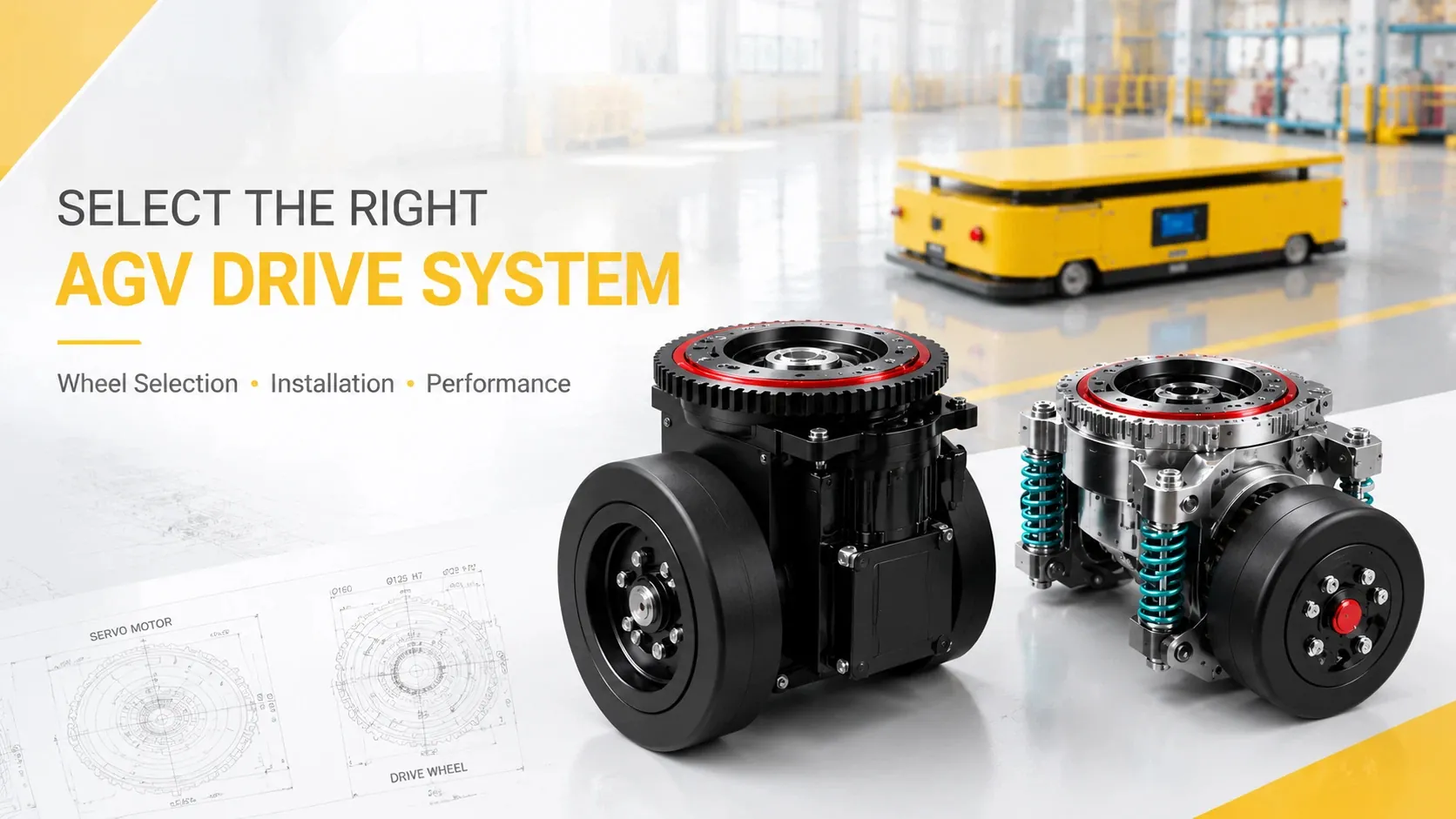
Three Common Drive Wheel Types
| Wheel Type | Movement Capability | Structural Complexity | Best Use Case |
|---|---|---|---|
| Differential Wheel | Forward, backward, and simple turns | Low | Low-cost, standard towing AGVs |
| Steering Wheel (Rudder) | Full turning, lateral movement, in-place rotation | Medium to High | Heavy loads, compact spaces |
| Mecanum Wheel | Lateral translation, zero-radius turns in any direction | High | Ultra-tight spaces, complex path layouts |
Choosing the Right AGV Drive Wheel for Your Payload
Selecting the wrong drive wheel causes expensive downtime and fast component wear. You must calculate your system needs before buying any hardware.
Calculate the Total Load with Safety Margins
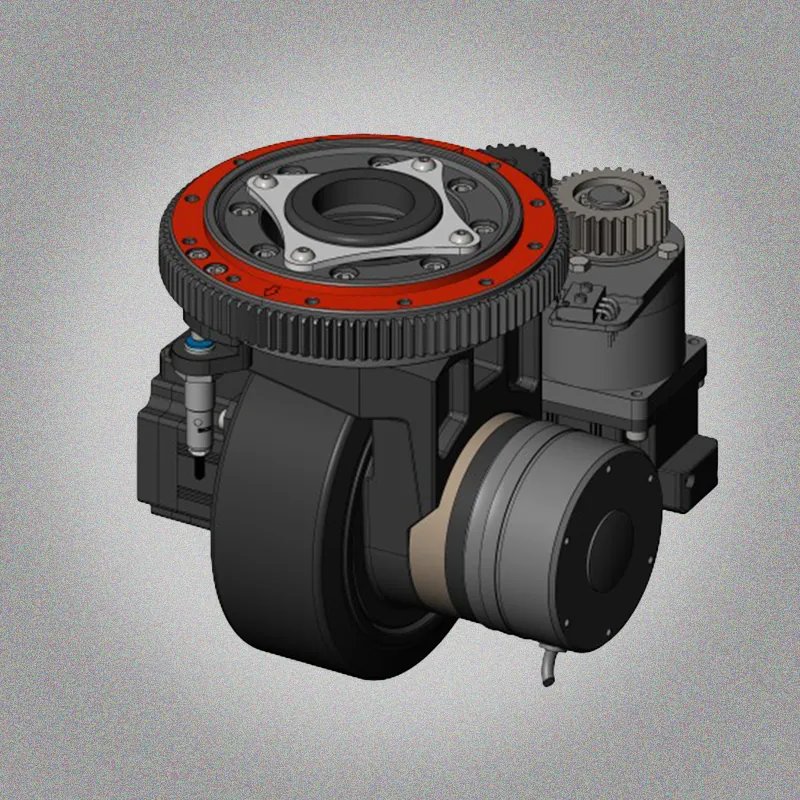
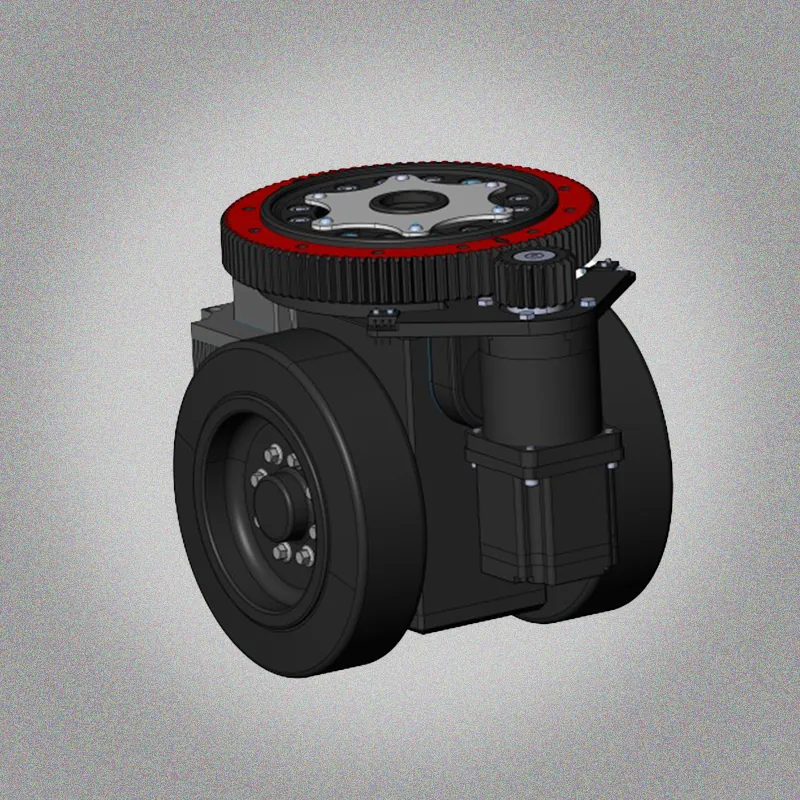
To find the right wheel capacity, add your vehicle weight to your maximum payload. Always add a safety margin of at least twenty percent. This extra margin covers sudden acceleration forces and ramp climbing. Our standard lineup supports payloads from 300 kg to 20,000 kg. If you run standard transport tasks, look at our CS Series differential drive wheels. For heavy loads requiring high maneuverability, our WDS and WDSS steering series are better options.
Select Your Wheel Tread Material by Floor Type
Your factory floor surface determines the best wheel tread material. Smooth epoxy floors work best with hard polyurethane wheel treads. Rough concrete floors require high-traction rubber wheels to prevent slipping. Using the wrong tread material causes fast wear and can damage your factory floors.
Match Your Speed and Precision Requirements
High-precision assembly lines require servo motors paired with high-resolution encoders. Every model in our current lineup features servo motor drives as a standard option. Always verify that your target travel speed matches the rated output of the motor.
Check Your Installation Space Constraints
Your vehicle chassis design dictates the physical size of the wheel. Our horizontal steering wheels mount with a lower profile than vertical steering wheels. This makes them perfect for low-profile under-ride vehicles. Always check the exact height against the product datasheet before ordering.
Step-by-Step Installation and Alignment Guide
Proper mechanical installation prevents premature wear and keeps your vehicle moving straight. Follow these five steps to set up your new drive wheel module.
- Prepare the surface — clean the vehicle mounting plate and check for flat surfaces.
- Align the axes — ensure the wheel’s rotation axis is parallel to the vehicle baseline.
- Secure the bolts — use high-strength bolts, tightened with a torque wrench in a cross pattern.
- Connect the cables — route power, encoder, and brake cables to prevent rubbing during movement.
- Calibrate the encoder — run a low-speed test to measure the exact wheel circumference in your software.
To maintain warehouse safety, always ensure your installation aligns with industrial standards such as ISO 3691-4 for driverless industrial trucks.
Troubleshooting Common Drive Wheel Issues
Vehicle drifts to one side
Check for uneven wheel wear and verify that motor control parameters are identical on both sides.
Excessive noise or vibration
Inspect the gearbox lubrication and check the wheel tread for flat spots or debris.
Wheel slippage
Clean the floor of oil or water, and confirm the vehicle isn’t overloaded beyond its rated capacity.
Steering wheel turns past its expected range
Our WDS and WDSS series include both electronic and mechanical limit devices — if a wheel turns beyond the preset angle, check the electronic limit signal first, then inspect the mechanical limit bolt as a backup safeguard.
Frequently Asked Questions
What’s the difference between a differential drive wheel and a steering wheel?
A differential drive wheel turns the vehicle by varying the speed between two wheels, with no independent steering motor. A steering wheel adds a dedicated steering motor and slewing bearing, allowing lateral movement and in-place rotation.
Do you offer Mecanum wheels?
Not currently — our product line focuses on differential and steering wheel configurations, covering 300 kg to 20,000 kg loads across standard and compact installation profiles.
How much safety margin should I add when calculating load capacity?
A minimum of 20 percent above your calculated total weight (vehicle plus payload) is standard practice, to account for acceleration and ramp climbing.
What causes a drive wheel to drift or pull to one side?
This is usually uneven wheel wear or mismatched motor control parameters between the left and right wheels. Check both before assuming a mechanical fault.
The Houzai Advantage: Your Industrial Partner
Balancing cost and quality is simple when you have the right partner. As the official core partner of Zhuolan, the Houzai team offers premium industrial transmission solutions. We provide high-quality reducers, drive wheels, and complete movement components. Tell our support team your payload and space constraints today to receive a detailed product recommendation within one business day.